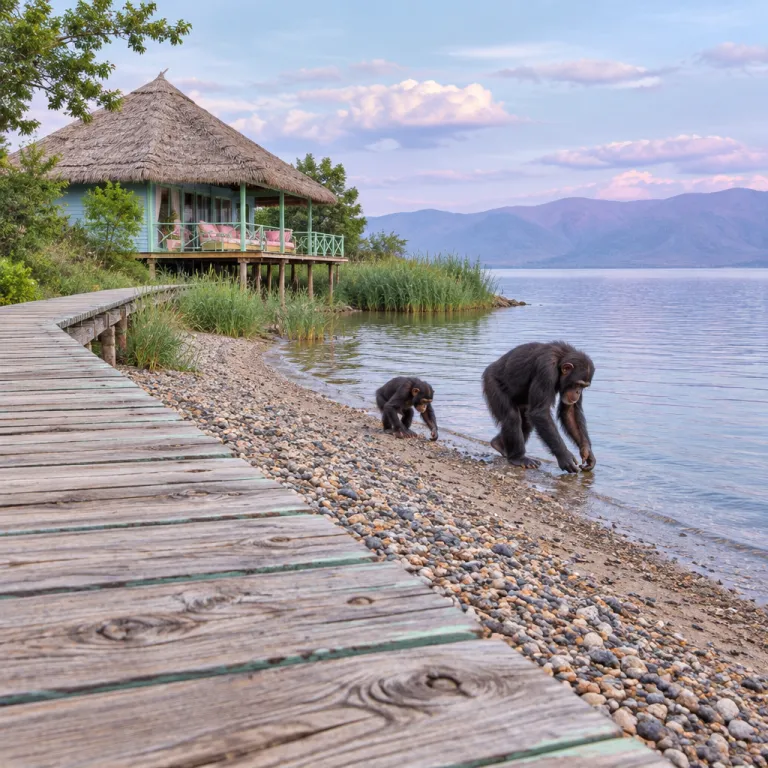
Where chimpanzee trekking Tanzania lodges sit on the map
Western Tanzania feels like a different country from the classic safari circuits. Here, chimpanzee trekking lodges sit between steep green mountains and the glassy surface of Lake Tanganyika, far from the Serengeti plains and the Ngorongoro Crater drives. The focus is not the Big Five tally but walking quietly into the forest to meet wild chimpanzees on their own terms.
The two main hubs for chimpanzee trekking are Gombe Stream and the Mahale Mountains, both protected as a national park and both pressed hard against the lake shore. Gombe, formally known as Gombe Stream National Park, is compact and steep, while Mahale Mountains National Park spreads along a longer stretch of coast with deeper forest and more remote mountains. Your choice of park will shape everything from how many days you stay to how intense your trekking feels.
Gombe is where Jane Goodall began her long term research on chimps, and the legacy of that work still shapes how guides talk about each chimpanzee and each family group. The Gombe forest rises sharply from the lake, so even short walks can feel like serious trekking through tangled roots and stream beds. Mahale, by contrast, offers a broader sweep of forest and mountains, with several habituated groups of chimpanzees ranging from low valleys to high ridges.
Both parks sit on the eastern shore of Lake Tanganyika, one of Africa’s Great Lakes and a defining presence for every lodge here. The lake becomes your highway and your horizon, with boats shuttling guests between remote beaches and the forest edge. On clear days you can sometimes see the hazy outline of Congo’s mountains across the water, a reminder of just how far west in Tanzania you have travelled.
What a chimp trekking day actually feels like
A typical day of chimpanzee trekking in Tanzania starts early, often before the forest has fully shrugged off the night’s mist. Guides listen for distant calls from chimps in the canopy, then decide which direction the group will take for that morning’s trekking. There is always a plan, but the forest and the chimpanzees have the final word.
You walk in small groups, usually no more than six or eight guests, with a lead guide and trackers who know every fold of the mountains. Trails can be steep, muddy and root strewn, especially outside the dry season from roughly June to October when the forest floor holds more moisture. Reasonable fitness is important, because even a short distance on the map can mean an hour of steady climbing through dense forest in a national park where there are no vehicle tracks.
When the trackers finally locate a chimpanzee group, the pace changes from trekking to careful, quiet approach. Rangers enforce strict distance rules to protect both you and the wild chimpanzees, and time with them is usually limited to about one hour per trek. You watch chimps grooming, feeding or arguing in the trees, and sometimes a wild chimpanzee will descend to the ground and cross the path with a casual confidence that feels almost unsettling.
There is no guarantee on any given day that you will see chimpanzees, and that uncertainty is part of the experience. Some days the chimps stay high in the mountains, and the group turns back after hours of climbing with only distant calls echoing through the forest. Other days they feed low near a stream, and you spend your full allotted time watching a single chimpanzee family move through shafts of light in the forest gloom before returning to camp for a late, well earned breakfast that rivals a classic Tanzanian bush breakfast experience.
Life on the lake: lodges between forest and water
The lodges built around chimpanzee trekking in Mahale and Gombe lean into their lakefront setting. Most sit directly on the sand, with forest behind and Lake Tanganyika in front, so your days pivot between mountains and water. It feels less like a traditional safari camp and more like a remote coastal retreat that just happens to have wild chimpanzees in the hills behind it.
At Mahale, the most storied property is Greystoke Mahale, a small camp of thatched bandas tucked under the forest edge. Guests arrive by boat, stepping off onto a pale beach with the mountains rising sharply behind, and the camp’s design keeps everything open to the lake breeze. Evenings often end with a drink on the sand, a western Tanzania take on the classic Tanzanian sundowner ritual, while the last light catches the forested slopes where the chimps sleep.
Gombe’s accommodation is simpler and closer to the research history of the park, but the rhythm is similar. Mornings are for chimp trekking in the forest, while afternoons might be spent kayaking along the shore, swimming in the clear lake or watching fish eagles patrol the shallows. On still days, Lake Tanganyika feels almost like a vast, cool swimming pool, and many guests say that the contrast between hot, humid forest and refreshing water is one of the region’s quiet luxuries.
Because these lakeside lodges are so remote, they operate almost as self contained worlds, with attentive teams and highly personalised service. Menus lean on fresh lake fish and seasonal produce, and staff quickly learn how many days you plan to trek and when you prefer to rest. One recent guest summed it up simply: “By the second night they knew how I took my coffee and which chimp family we were hoping to see next.” Nights are dark and quiet, broken only by waves on the shore and, occasionally, the distant calls of chimpanzees drifting down from the mountains.
Getting there, seasons and how to combine your stay
Reaching chimpanzee trekking Tanzania lodges in the west is part of the adventure, and it requires more planning than a standard safari. Most travellers route through Dar es Salaam or Arusha, then take a scheduled light aircraft flight of around three to four hours, often via Kigoma or Tabora, to a lakeside airstrip before continuing by boat to their chosen park. The journey can take most of a day, so it is wise to plan several days at each lodge rather than a quick overnight.
The best time for chimpanzee trekking depends on how you balance comfort and challenge. Many travellers favour the dry season, roughly June to October, when trails are less slippery and the forest undergrowth is thinner, making it easier to follow chimps through the trees. In wetter months the forest feels lusher and more atmospheric, but trekking can be tougher and you will need to be comfortable with mud, humidity and the possibility of longer days on foot.
Western Tanzania combines well with Katavi National Park, which offers some of the most intense big game viewing in Africa with far fewer vehicles than the better known parks. A classic circuit might include several days of safari in Katavi, followed by three or four days of chimpanzee trekking at Mahale Mountains National Park on the shore of Lake Tanganyika. Some travellers also link a western circuit with time in the north, flying on to the Serengeti or the Ngorongoro Crater for a more traditional safari finish.
Health and logistics deserve serious attention when planning these trips, especially for solo travellers. Yellow fever regulations can change, so you should check current requirements for Tanzania and any transit countries well before you fly, and carry proof of vaccination if needed. Because flights are small and remote, luggage limits are strict, and you will want to pack light but carefully, with good trekking shoes, quick drying clothes and a system for keeping cameras safe from forest humidity.
Ethics, primate health and how this differs from gorilla trekking
Walking into a forest to meet wild chimpanzees is a privilege that comes with responsibilities. Chimp trekking lodges in these national parks operate under strict rules designed to protect both the chimps and the people who visit them. Rangers will brief every group carefully before trekking, and they will not hesitate to turn guests back if rules are ignored.
Distance is the first line of protection, because chimps and humans can share many diseases. You will be asked to keep several metres away from any chimpanzee or wild chimpanzee group, and to wear a mask when you are close, especially in the more humid forest sections where air hangs still. Anyone feeling unwell is usually not allowed to trek, because a simple cold could have serious consequences for a small population of wild chimpanzees.
Time limits also matter, and they are one of the key differences between chimp trekking here and gorilla trekking in Uganda or Rwanda. In both cases, visits are carefully controlled, but chimpanzees are more mobile and more arboreal, so rangers balance the desire for sightings with the need to avoid chasing chimps through the forest for hours. The result is an experience that can feel more unpredictable than a typical gorilla trekking day, but also more like stepping briefly into the daily life of a forest animal that still chooses where it will go.
For many travellers, this ethical framework is part of the appeal, especially those who have already visited Uganda, Rwanda or Queen Elizabeth National Park and want a different kind of primate encounter. Western Tanzania offers that contrast, with mountains national parks that meet a vast lake instead of savannah plains, and lodges that frame the experience with quiet, low impact comfort. If you are drawn to wellness focused stays, it pairs surprisingly well with forest based retreats near Lake Manyara, where some lodges now offer thermal springs and forest bathing experiences after more traditional safari days.
FAQ
How fit do I need to be for chimpanzee trekking in Mahale or Gombe ?
You should be comfortable walking for several hours on steep, uneven forest trails. The mountains rise sharply from Lake Tanganyika, so even short distances can involve sustained climbs in humid conditions. A moderate fitness level is usually enough, but if you struggle with hills you may find some days challenging.
How many days should I spend at chimpanzee trekking Tanzania lodges ?
Plan at least three nights, which gives you two or three full trekking days and some flexibility if chimps are hard to find. Many travellers choose four nights to balance forest time with lake based relaxation. Because reaching these parks takes time, shorter stays rarely feel worthwhile.
What is the best season for seeing chimps in western Tanzania ?
The dry season is often considered the best time, because trails are less slippery and visibility in the forest improves. During wetter months, chimpanzees may range more widely and trekking can be tougher, but the forest feels richer and more atmospheric. Your tolerance for heat, humidity and mud should guide your choice.
Can I combine chimp trekking with a traditional safari elsewhere in Tanzania ?
Yes, many itineraries pair Mahale or Gombe with Katavi National Park for big game, or with northern highlights like the Serengeti and the Ngorongoro Crater. Internal flights make these combinations feasible, though they add cost and require careful planning. A specialist Tanzania operator or a focused platform like mytanzaniastay.com can help sequence the parks efficiently.
Do I need any special vaccinations or permits for chimpanzee trekking ?
You must hold a valid park permit for each trekking day, which your lodge or agent usually arranges in advance and which can cost several hundred US dollars per person depending on the park and season. Yellow fever vaccination requirements depend on your transit route, so check current regulations for Tanzania and any connecting countries before travel. Standard travel health precautions for East Africa also apply, including malaria prevention and up to date routine vaccinations.