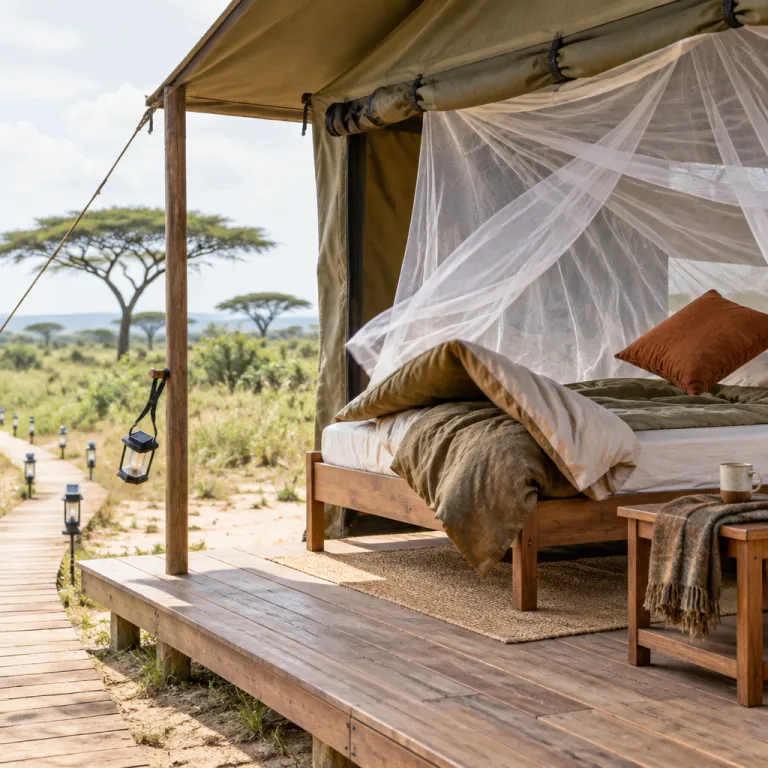
Why sleep in the Tanzanian bush feels different from home
Sleep tourism on safari in Tanzania begins with darkness that most urban travelers have never felt. In the remote national parks the horizon melts into ink, the air cools sharply after sunset, and your circadian rhythm quietly aligns with the slow breathing of the wild animals outside the canvas walls. This is where a carefully planned Tanzania safari becomes less about a checklist of wildlife and more about a deep reset of body and mind.
In Serengeti National Park, in the quieter corners away from the main great migration corridors, the night is shaped by distance from generators and by how each camp manages light. Some safari camps in this northern circuit region now dim pathways early, use warm spectrum lanterns and position tents so that no beam spills onto the savannah, which turns a standard safari experience into a rare immersion in natural darkness. When you are lying in bed and the only glow comes from the Milky Way above the Serengeti, sleep tourism safari Tanzania stops being a trend phrase and becomes a physical sensation in your nervous system.
The silence is never absolute, yet it is profoundly restful compared with city noise. You hear hyenas whoop far across the plains, the low contact calls of wild animals like lions, and the rustle of smaller creatures moving through the grass, but there is no traffic hum and no aircraft corridor overhead. In this part of East Africa the soundscape is shaped by wildlife and wind, and a well sited camp will use the natural contours of the land to shield you from neighboring tents so that each couple feels alone with the night.
Temperature is the final ingredient that makes sleep on a Tanzania safari uniquely restorative. At altitude near the Ngorongoro Crater or on the rim of Lake Manyara National Park, evenings cool enough for hot water bottles and thick duvets encourage longer, deeper rest than you might expect on a trip to Africa. In the southern parks, where nights stay warmer, screened verandas and ceiling fans are positioned to catch prevailing breezes, allowing the body to shed heat and slide into sleep without the mechanical drone of heavy air conditioning.
All of this matters because rest is no longer framed as downtime between game drives. For many burnt out professionals, the promise of sleep tourism safari Tanzania is the chance to let the nervous system recalibrate in a place where time is measured by sunrise, by the rhythm of day safari outings, and by the slow approach of elephants to a moonlit waterhole. When you choose camps that respect darkness, silence and temperature, the entire safari Tanzania journey becomes a wellness retreat built around the night rather than the alarm clock.
Designing the perfect night: star beds, soundproofing and quiet luxury
The most forward thinking safari camps in Tanzania now design from the bed outward, not from the bar inward. Architects start by orienting each tent or suite toward a view that will feel hypnotic at dusk, whether that is the open plains of Serengeti National Park, a line of fever trees near Lake Manyara or the distant rim of Ngorongoro Crater. From there they consider how to layer comfort, privacy and silence so that sleep tourism safari Tanzania feels intentional rather than accidental.
Star beds and elevated sleep out decks are the most visible expression of this shift. In carefully secured areas of Serengeti or Tarangire National Park, raised platforms allow couples to sleep under the sky with only a mosquito net between them and the wild, while guides keep watch from a discrete distance to ensure safety among the wild animals. When the great migration passes near these platforms, the low thunder of hooves becomes a natural sound machine, and the safari experience turns into something closer to open air meditation than conventional accommodation.
Inside the main tents, design details matter just as much. High thread count linens, layered duvets and natural fiber throws help regulate temperature through the cool hours before dawn, while blackout drapes or cleverly recessed window panels block stray light from pathways or the main camp fire. Thoughtful spacing between tents, combined with acoustic insulation in key wall sections, means you hear the night sounds of Tanzania but not your neighbors returning from late game drives or early hot air balloon departures.
Power management is another quiet luxury that directly affects sleep. Camps that limit generator hours and rely on solar power for essential systems reduce low frequency hum, which can fragment rest even when you think you are sleeping well, and this is especially important for guests using sleep tourism safari Tanzania as a reset from urban overstimulation. Before booking, ask whether the camp runs a central generator all night, uses individual in room inverters, or has invested in near silent solar banks, because the difference in perceived quiet can be remarkable.
Wellness focused properties in Tarangire National Park, including refined tented retreats such as those profiled in this elegant Tarangire tented camp review, often combine these design choices with small touches like herbal pillow menus and pre sleep stretching decks. You might return from afternoon game drives to find a drawn bath scented with local botanicals, or a tray of caffeine free infusions sourced from a nearby coffee plantation, all arranged to slow the body before the early night. In this way, the camp itself becomes a wellness instrument, tuning every detail toward the kind of deep rest that makes a Tanzania safari feel like a genuine retreat.
Rest as the headline act: wellness framing on a Serengeti sleep safari
On many classic itineraries through the northern circuit, rest has long been treated as a gap between activities. You rise before dawn for game drives in Serengeti National Park, race back for breakfast, then collapse for a short nap before the afternoon safari experience, and the night becomes an afterthought rather than the main event. Sleep tourism safari Tanzania turns that model on its head by treating the hours between dusk and dawn as the core reason for the trip.
In Serengeti, where the great migration defines the calendar, some camps now build entire wellness programs around the rhythm of the herds. When the wildebeest and other wild animals are close, you might spend the day on long game drives, then return to a camp that deliberately slows the pace with guided breathwork on your private deck, followed by an early, quiet dinner under the stars. When the migration has moved on to other national parks in East Africa or toward the Tanzania Kenya border, the same camps may emphasize longer nights, late wake ups and spa treatments that lean into the silence of the off peak plains.
This reframing is particularly powerful for couples using a Tanzania safari as a shared reset. Instead of chasing every possible activity, you might choose one long day safari in Serengeti National Park, then dedicate the following day to slow time in camp, reading on the veranda, watching bird species gather at a nearby waterhole and letting the body catch up with the mind. Sleep tourism safari Tanzania encourages you to see this as the point of the journey, not a missed opportunity, and the best camps communicate this clearly at booking stage so expectations align.
Wellness led properties also rethink how they talk about wildlife. Rather than promising constant action, they emphasize the restorative quality of simply watching animals move across the landscape, whether that is elephants crossing a river at dusk or a lone lion patrolling the edge of camp at first light. Articles such as this guide to Serengeti animals and refined stays highlight how luxury hospitality can meet the wild without overwhelming the senses, and that philosophy sits at the heart of sleep focused itineraries.
For many guests, the most memorable moments of safari Tanzania are not the dramatic sightings but the quiet intervals between them. A hot air balloon flight at dawn over the Serengeti plains, followed by a long, slow brunch and an unapologetically lazy afternoon nap, can do more for long term wellbeing than another rushed drive in search of predators. When camps design their schedules, menus and spa offerings around this idea, the entire Tanzania trip becomes a wellness retreat that happens to include some of the most incredible wildlife on the planet.
Balancing early game drives with unhurried nights
The classic tension on any Tanzania safari is simple to describe and harder to solve. Dawn is the prime time for wildlife activity in most national parks, yet the deepest, most restorative sleep often comes in those same pre sunrise hours when the air is coolest and the bush is quietest. Sleep tourism safari Tanzania asks a provocative question here ; what if you did not chase every early game drive, and instead protected some mornings for unbroken rest.
Some of the most thoughtful safari camps now offer flexible schedules that respect both instincts. On certain days you might join a full early morning game drive in Tarangire National Park or around Lake Manyara, returning by mid morning for a long, slow brunch and a nap, while on others you can opt for a later start, perhaps a mid morning walking safari or a gentle bird species focused outing that does not require a 5 a.m. wake up. This approach recognizes that the wellness value of sleep tourism safari Tanzania can be undermined if guests feel pressured to be on every vehicle, every time.
Location within each park also shapes how easily you can balance rest and activity. Camps close to busy airstrips or main access roads may offer quick transfers but often pay the price in early morning noise from vehicles and aircraft, which can fragment sleep even on days when you are not joining game drives. By contrast, properties set deeper inside Serengeti National Park, near quieter valleys or along less trafficked river lines, tend to offer more consistent silence, allowing you to choose which mornings to rise early without being woken by other guests.
Wellness oriented itineraries across the northern circuit often pair a few high intensity wildlife days with longer, slower stays near Ngorongoro Crater or in the southern parks. You might spend two nights near the Ngorongoro Crater rim, where cool temperatures and thick duvets encourage early nights, then move to a quieter camp in the wild reaches of Tarangire National Park for three nights of unhurried rest and shorter, more focused drives. In this way, the overall safari Tanzania journey respects both the desire to see incredible wildlife and the need to return home genuinely restored.
For couples planning a trip with sleep tourism safari Tanzania in mind, the key is to be explicit about your priorities when booking. Ask camps how rigid their game drive schedules are, whether private vehicles can leave later without penalty, and how they handle guests who prefer to skip certain outings in favor of spa treatments or simple rest. A camp that responds enthusiastically to these questions is far more likely to deliver the kind of balanced, wellness centered experience that turns a Tanzania trip into a long term reset rather than a beautiful but exhausting adventure.
How to choose a genuinely quiet camp in Tanzania
Selecting the right camp is where sleep tourism safari Tanzania either flourishes or fails. Two properties in the same national park can offer similar wildlife viewing yet deliver radically different nights, depending on how they manage noise, light and guest flow. For couples treating their Tanzania safari as a wellness retreat, due diligence before booking is non negotiable.
Start with geography and spacing. In Serengeti National Park and other major national parks, look for camps that sit away from busy junctions, airstrips and staff villages, ideally with natural buffers such as rocky outcrops, river lines or stands of acacia that absorb sound from neighboring properties. Ask directly about the distance between tents or suites, because generous spacing not only preserves privacy but also reduces the chance that you will hear other guests returning from late game drives or early hot air balloon excursions.
Power and infrastructure questions come next. A camp that runs a large diesel generator all night will rarely feel as tranquil as one that relies on solar power with limited backup, even if both are in the same wild corner of Tarangire National Park or near Lake Manyara. When researching options, resources such as this review of an intimate tented lodge positioned between Ngorongoro and Tarangire on a curated Tanzania camp guide can help you understand how thoughtful properties manage energy, lighting and guest comfort without sacrificing the silence that underpins deep rest.
Consider also the style of activities each camp emphasizes. Properties that focus on long, shared vehicle game drives with fixed departure times tend to generate more movement and noise at dawn and dusk, while those that offer a mix of walking safaris, shorter day safari outings and in camp wellness experiences often feel calmer. If sleep tourism safari Tanzania is your priority, look for language about flexible schedules, private guiding and the option to spend full days in camp without pressure to join every excursion.
Finally, pay attention to the broader circuit design of your trip across Tanzania and neighboring East Africa regions. Combining intense wildlife days in Serengeti or near the Ngorongoro Crater with quieter interludes at a coffee plantation lodge or a low key southern park camp can create a rhythm that supports both adventure and recovery, especially for guests arriving from demanding professional lives. When you align camp choice, park selection and daily pacing around the simple goal of better sleep, the entire safari Tanzania experience becomes more coherent, more restorative and, ultimately, more memorable.
FAQ
Is a sleep focused safari in Tanzania suitable for first time visitors ?
A sleep focused safari Tanzania itinerary works well for first timers who value rest as much as wildlife. You still visit headline areas such as Serengeti National Park and the Ngorongoro Crater, but you choose camps that prioritize quiet, flexible schedules and wellness facilities. This balance allows you to experience incredible wildlife without the exhaustion that sometimes comes with more aggressive game viewing programs.
How many nights should I plan for a sleep tourism safari in Tanzania ?
For most couples, a minimum of seven to ten nights in Tanzania is ideal for a sleep tourism safari Tanzania journey. This allows time in at least two national parks, such as Serengeti and Tarangire National Park or Lake Manyara, plus a slower stay near the Ngorongoro Crater or at a coffee plantation lodge. With this duration you can alternate early game drives with full rest days, which is essential for a genuine wellness reset.
Which Tanzanian parks are best for quiet, wellness oriented camps ?
Serengeti National Park offers some of the most refined sleep focused safari camps, especially in less trafficked valleys away from the main great migration routes. Tarangire National Park and certain areas near Lake Manyara also host camps known for spacious layouts, limited generator use and strong wellness programs. For even deeper quiet, some travelers add a southern park to their Tanzania safari, where visitor numbers are lower and nights feel particularly wild.
How can I check if a camp will really be quiet at night ?
Before booking, ask specific questions about generator hours, distance between tents, proximity to airstrips and the timing of early activities such as hot air balloon launches. Read recent guest reviews that mention noise, sleep quality and how the camp handled requests to skip early game drives, as these details often reveal more than general marketing language. A property that answers transparently and offers flexible schedules is more likely to support the goals of sleep tourism safari Tanzania.
Do I have to skip game drives to benefit from sleep tourism in Tanzania ?
You do not need to skip all game drives to enjoy the benefits of sleep tourism safari Tanzania. The key is to be selective, choosing a few high impact early outings in each national park and then protecting certain mornings for unbroken rest or slower activities. Camps that understand wellness will help you design a schedule that balances wildlife viewing with the kind of deep sleep that makes the entire Tanzania trip feel restorative.
References : Tanzania Association of Tour Operators (TATO) ; Tanzania National Parks Authority (TANAPA) ; Ngorongoro Conservation Area Authority (NCAA).