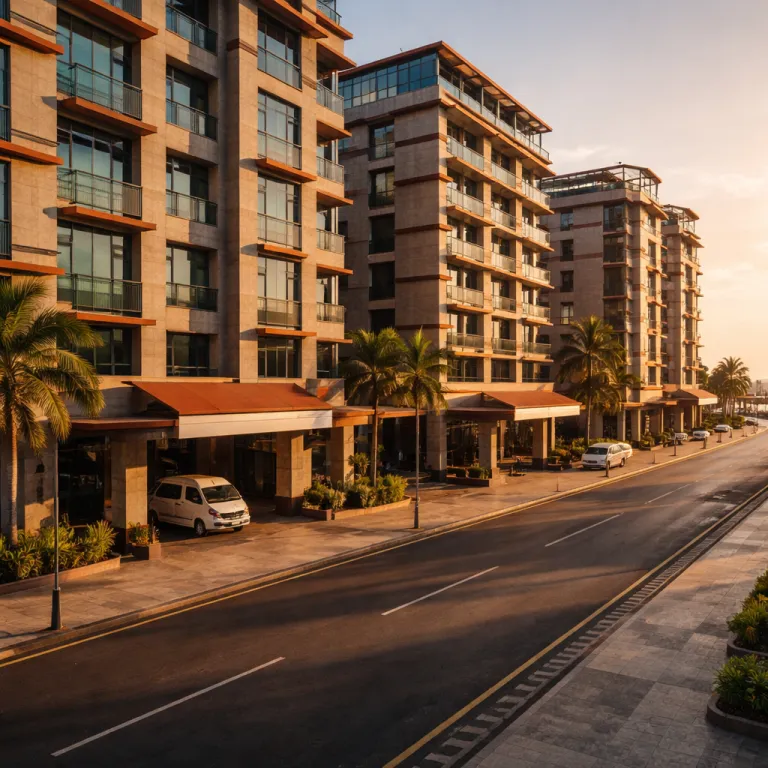
Why Ilala works as a base in Dar es Salaam
Traffic on Morogoro Road thins out just after sunrise, when the city’s first commuters are already heading toward the port and the central business district. Staying in Ilala places you right inside this daily rhythm of Dar es Salaam, in a district that feels resolutely local yet practical for both business and onward travel.
For many travelers, the main question is simple: is a hotel in Ilala a good idea compared with staying closer to the harbour view or the beach? The answer depends on what you need from the city. If you are in Dar for meetings, embassy visits, or a short overnight between flights and the ferry terminal, Ilala’s position between the city center and Julius Nyerere International Airport is a clear advantage. Distances are shorter, and you avoid the long cross-town transfers that can eat into a tight schedule.
Leisure travelers sometimes overlook this area, drawn instead to the waterfront or the peninsula. Yet Ilala offers a more grounded sense of Dar es Salaam, with markets, small cafés, and everyday life unfolding on the pavements. It is not a resort setting, but it is a smart, efficient base for a one- or two-night stay before flying to the Serengeti or crossing to Zanzibar for snorkeling and diving.
The Ilala hotel landscape: what to expect
Street by street, the hotel offer in Ilala shifts from simple guesthouses to more polished city properties. Around the administrative corridors of the district, you will find several mid-range Ilala hotels that focus on business guests, with functional lobbies, compact bars, and straightforward service. These are not destination addresses in themselves, but they are reliable places to sleep, shower, and get back to work or travel.
Rooms in this part of Dar es Salaam tend to be practical rather than theatrical. Expect standard double or twin layouts, a desk for laptop work, and often a small seating corner rather than expansive suite hotel configurations. Some properties do offer larger suites or apartment-style layouts, which can be useful if you are staying several nights or sharing with colleagues. When you see the term “view suites” in this district, it usually refers to elevated city views rather than a direct harbour view.
Compared with coastal neighbourhoods, the atmosphere in Ilala hotels is quieter in the evenings, with guests returning from the city center, the port, or the airport rather than from the beach. Bars, where they exist, are generally compact and geared toward a quick drink before bed rather than a full night out. If you want nightlife, you will likely take a short taxi ride toward the waterfront or the peninsula.
Location, transfers and access to the rest of Tanzania
From Ilala, the geography of Dar es Salaam works in your favour. The district sits roughly between Julius Nyerere International Airport and the historic core of the city, so transfers to both the airport and the business center are usually shorter than from the coastal suburbs. On a good day, you can reach the terminal in around 20–30 minutes by car, which makes Ilala a logical choice for an early-morning flight or a late-night arrival.
For travelers heading to Zanzibar, the Azam Marine and Kilimanjaro Fast Ferries terminal near Sokoine Drive is another key reference point. Staying in Ilala means you are close enough to reach the ferries in roughly 15–30 minutes by taxi, depending on traffic, without committing to a full city center stay right by the port. This can be especially useful if Dar es Salaam is only a brief stop on a longer Tanzania itinerary that includes safari, island time, and perhaps some snorkeling or diving off the Swahili coast.
Within the district itself, main arteries such as Nyerere Road and Uhuru Street connect you quickly to the rest of Dar es Salaam. You are not on the waterfront, and you will not have a sweeping harbour view from most rooms, but you gain in practicality. For many business travelers, that trade-off is worth it: less time in traffic, more time in meetings or simply resting between journeys.
Rooms, suites and choosing the right category
When you book a hotel in Ilala, the real decision is less about décor and more about function. Standard rooms are usually compact but adequate for a one- or two-night stay, with enough space to open a suitcase, work at a small desk, and rest properly before your next leg of travel. If you are arriving from a long-haul flight, consider asking for a quieter room facing away from the main roads, as traffic in Dar es Salaam can start early.
Suites in this district tend to be modestly scaled, often adding a separate sitting area rather than a dramatic change in style. They work well if you need to host brief business conversations in your room or if you are sharing with family and want a little separation between sleeping and living areas. Apartment-style layouts, where available, suit longer stays or guests who prefer more of a residential feel in the city center.
Views are mostly urban: rooftops, tree-lined streets, and the distant outline of the city rather than the ocean. If a view matters to you, check whether higher floors offer a better city panorama. For many guests, though, the priority in Ilala is not the outlook from the window but the reliability of the room itself and the ease of moving between the hotel, the airport, and the central districts of Dar es Salaam.
Who Ilala suits best – and when to look elsewhere
Travelers with a clear agenda tend to benefit most from staying in Ilala. If your trip to Tanzania revolves around meetings in government offices, corporate visits, or quick turnarounds between flights and ferries, the district’s central position is hard to beat. You are close to the city center without being immersed in its heaviest traffic, and you can move efficiently between the airport, the port, and key business addresses.
For leisure-focused stays, the calculation changes. If your priority is to unwind by the water, enjoy long evenings in seafront bars, or wake up to an Indian Ocean breeze, you may prefer neighbourhoods closer to the coast. Ilala does not pretend to be a beach destination; it is a working part of Dar es Salaam, with a more functional city feel. Some travelers appreciate this authenticity, others miss the resort atmosphere.
Families and small groups often use Ilala as a practical overnight stop at the start or end of a longer itinerary through Tanzania. One night to rest, repack, and reset before heading to the national parks or the islands. If that is your plan, look for hotels that offer flexible room configurations, such as interconnected rooms or simple suites, so that everyone can sleep comfortably without overcomplicating the stay.
How to compare Ilala hotels before you book
Choosing between several hotels in Ilala comes down to a few concrete criteria. First, map the exact address against your own movements in Dar es Salaam: are you closer to the airport road, the city center, or the ferry terminal? A difference of just a few kilometres can save you significant time in traffic, especially during peak hours. For business trips, proximity to your main meeting points should outweigh almost everything else.
Next, look carefully at room descriptions. Decide whether a standard room will be enough or whether a suite or apartment-style layout will make your stay more comfortable. If you plan to work from your room, a proper desk and good lighting matter more than decorative touches. If you expect to host brief conversations, a small sitting area can be useful. Bars and shared lounges vary in size and atmosphere, so consider whether you need a social space in the hotel or whether you will mostly be out in the city.
Finally, pay attention to practical services that can make a short city stay smoother, such as reliable transfers to the airport or the port and clear information about check-in and check-out. Ilala is not about spectacle; it is about efficiency. When those basics are handled well, the district becomes a quietly effective base for exploring Dar es Salaam and the wider routes across Tanzania.
FAQ
Is staying in Ilala convenient for the airport and ferry terminal?
Yes, Ilala sits between Julius Nyerere International Airport and the historic core of Dar es Salaam, so transfers to both the airport and the Zanzibar ferry terminal are generally shorter than from coastal neighbourhoods. Typical taxi journeys take around 20–30 minutes to the airport and roughly 15–30 minutes to the port, depending on traffic and time of day.
Is Ilala a good area for business travelers?
Ilala works very well for business travelers because it is close to administrative offices, commercial areas, and the city center while still offering relatively direct access to the airport. Hotels in this district tend to focus on functional rooms, straightforward services, and easy transfers, which suits guests with tight schedules.
What kind of atmosphere should I expect in Ilala compared with the waterfront?
The atmosphere in Ilala is more local and work-focused than along the waterfront or the peninsula. You will find markets, everyday shops, and small cafés rather than seafront promenades and beach clubs. Evenings are usually quieter, with guests returning from work or travel rather than from nightlife on the coast.
Are Ilala hotels suitable for a longer leisure stay in Dar es Salaam?
For a longer leisure stay focused on relaxation, sea views, and beach time, areas closer to the coast are usually a better fit. Ilala is best used as a practical base for one or two nights, especially when you are in transit between flights, ferries, and inland or island destinations in Tanzania.
Who should consider Ilala over coastal neighbourhoods?
Travelers who value efficient transfers, proximity to the city center, and a grounded sense of Dar es Salaam’s daily life should consider Ilala. This includes business guests, families in transit, and anyone using the city mainly as a hub before heading on to safari, Zanzibar, or other parts of Tanzania.