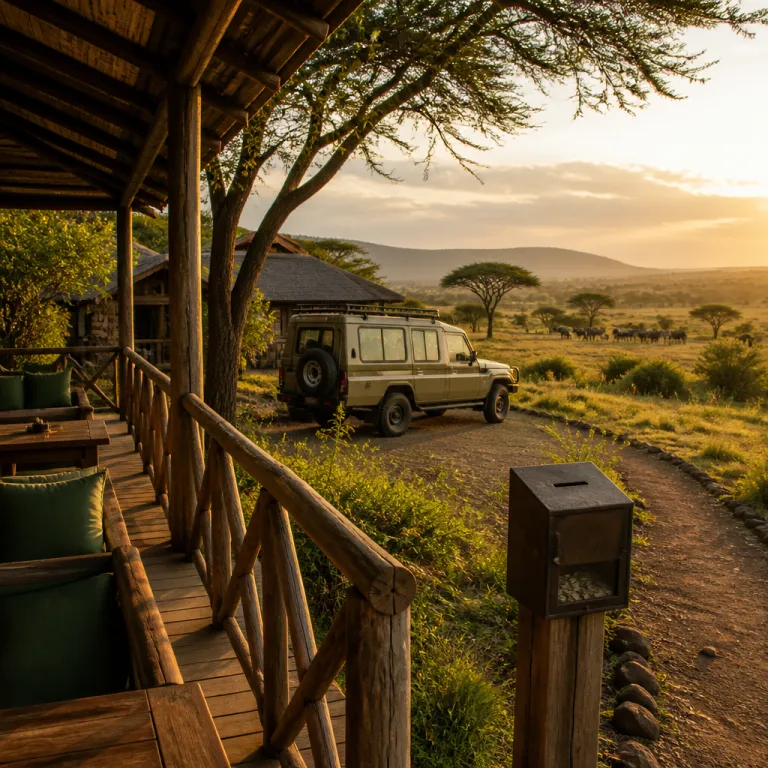
Understanding Tanzania’s conservation levy on luxury hotel stays
Every premium hotel invoice in Tanzania quietly carries a story of conservation and tourism growth. When you scan the line items, from park fees to the small tourism tax, you are looking at one of the most direct funding pipelines for wildlife protection in Africa. That is why understanding how the Tanzania conservation levy tourism model works can change how you feel about every sundowner above a crater rim or national park plain.
On your bill you will usually see several separate fees that shape the tourism sector and its sustainability. There is the national park entry fee, a conservation levy or conservation fees, a concession charge for private land, and sometimes a community development levy that supports local communities near each conservation area. These levies and each individual levy may look like pure tax, yet in Tanzania they are designed as economic tools that help align African tourism with long term protection of natural resources and wildlife.
Alongside park charges, every registered luxury hotel in Tanzania collects a 1 percent tourism development levy on room revenue. The Tanzania Revenue Authority (TRA) administers this tourism levy under national tourism legislation, and hotel owners act as collectors who remit the levy through electronic fiscal devices and digital reporting systems that now cover more than two hundred properties nationwide, according to TRA guidance and budget speeches. This tourism tax is not a vague contribution; in official policy documents it is ring fenced to support conservation, tourism infrastructure and the wider tourism industry so that visitor numbers can grow without unacceptable environmental impact.
Guests often ask whether these levies are included in the room rate or added as separate fees at checkout. The answer varies by property, which is why you should always request a pro forma invoice that clearly separates accommodation, park charges, conservation levies and any community based contributions. When you book through a curated platform such as MyTanzaniaStay, clearly labelled as a commercial booking service, you can usually see whether the levy will be absorbed by the hotel or itemised, which helps you compare the real cost of different conservation areas and national park combinations across Tanzania and the wider Africa region.
Ngorongoro Wonders: where your money meets the crater rim
Nowhere does Tanzania conservation levy tourism feel more tangible than at Ngorongoro, where luxury lodges cling to the crater rim and gaze down on a living amphitheatre of wildlife. Here, every conservation levy and every tourism tax line on your bill has a direct impact on the conservation area you have just driven through at dawn. The Ngorongoro Conservation Area Authority (NCAA) manages this landscape differently from a classic national park, blending community based land use with strict wildlife protection.
When you stay at a high end lodge on the crater rim, your nightly rate includes several layers of fees and levies. The park entry fee and conservation fees go to the authority that oversees the conservation area, while the 1 percent tourism levy on your room charge flows to the Tanzania Revenue Authority to support the wider tourism industry and infrastructure. For a business leisure traveller, this structure means your corporate budget is quietly underwriting ranger patrols, road maintenance and community projects that reduce environmental impact.
Recent government budget proposals for natural resources and tourism, measured in hundreds of billions of Tanzanian shillings according to Ministry of Finance estimates and parliamentary committee reports, show how seriously the state treats tourism growth as an economic engine. In the 2023/24 budget speech, for example, the Ministry of Natural Resources and Tourism highlighted plans to expand staffing for TANAPA and wildlife agencies, a move that will strengthen anti poaching operations and improve monitoring across multiple conservation areas. These officers work alongside local communities and tour operators to ensure that rising visitor numbers do not erode the very wildlife spectacle that draws travellers from Kenya, Uganda tourism circuits and even South Africa.
For you as a guest, the question is simple: will your chosen property treat these levies as a compliance exercise or as a chance to support conservation in a meaningful way? At Ngorongoro Wonders level lodges, managers can usually explain how much of your spend goes to the park, how community based projects are selected, and what share of staff are hired from nearby villages. Ask them directly about tourism levy allocations, job creation statistics and any cross border conservation partnerships with Kenya or other African tourism destinations, and you will quickly sense whether their sustainability narrative matches the numbers.
From crater to canopy: how levies work at Lake Manyara and beyond
Leave the crater rim and drop down to Lake Manyara, and the Tanzania conservation levy tourism story shifts from volcanic drama to forested intimacy. Here, the national park is smaller, the visitor numbers are lower, yet the structure of fees and levies still underpins every game drive beneath the mahogany canopy. Luxury properties such as &Beyond Lake Manyara Tree Lodge, featured in our elevated safari retreat review, sit inside the park boundaries and therefore interact with conservation fees in a particularly direct way.
At Lake Manyara National Park, your daily park fee and conservation levy are charged per person, while the hotel’s 1 percent tourism levy is calculated on room revenue and remitted monthly to the Tanzania Revenue Authority. This dual structure means that both your presence as a visitor and the hotel’s commercial success contribute to tourism growth and sustainability in Tanzania. When aggregated across the tourism sector, these levies finance road grading, bridge repairs, ranger housing and communications infrastructure that keep the park operational during heavy rains and peak migration seasons.
For high end travellers who split time between Tanzania and Kenya or South Africa, the contrast in levy systems is instructive. Kenya often relies more heavily on conservancy fees negotiated with private landowners, while South Africa blends national park tariffs with provincial tourism tax mechanisms and community based levies. Tanzania’s model sits somewhere between, using nationwide tourism levy collection from hotels while allowing each conservation area to set its own conservation fees and community contributions that reflect local economic realities.
When you book a canopy level suite at Lake Manyara or a crater facing villa at Ngorongoro, ask your lodge to break down the proportion of your spend that goes to conservation, community and pure operating margin. The most credible properties will share data on job creation for local communities, training programmes for qualified guides and the environmental impact assessments that shape their building footprint. In a region where African tourism is expanding faster than in the previous year, such transparency is the clearest sign that your luxury stay is aligned with long term protection of wildlife and natural resources.
Following the money: from hotel bill to ranger patrol
Once you understand the structure of Tanzania conservation levy tourism, the next step is tracing how money moves from your hotel bill into the field. The 1 percent tourism development levy on room charges is collected by hotel owners, processed through billing systems and then remitted to the Tanzania Revenue Authority using digital reporting tools. This streamlined levy system has improved compliance compared with the previous year and given the government more reliable data on tourism sector performance across Tanzania.
Those funds, combined with park entry fees, conservation levies and other tourism tax instruments, feed into national and regional budgets for tourism infrastructure and conservation. In practice, that means salaries for rangers, fuel for patrol vehicles, maintenance of airstrips that serve remote national park locations and investment in communications networks that keep teams connected during anti poaching operations. When the government announces the recruitment of hundreds of new conservation officers in official speeches, it is these levies and fees that make such job creation financially viable.
Beyond core protection work, levy revenue also supports community based projects that reduce pressure on conservation areas and wildlife corridors. Examples include water points for villages bordering a park, classroom construction funded through community development levies, and small grants that help local entrepreneurs supply lodges with fresh produce or cultural experiences. By tying economic opportunity to the health of the conservation area, Tanzania aims to ensure that local communities see tourism growth as an asset rather than a threat to their land and natural resources.
As a guest, you can ask very specific questions that cut through vague sustainability language and focus on measurable impact. Request figures on how much your lodge paid in tourism levy and conservation fees in the last financial year, and how that compares with their revenue growth over the same period. Properties that treat sustainability as more than marketing will usually have this information at hand, often broken down by park, conservation area and type of levy, and they will be able to explain how their operations help support conservation beyond the minimum legal requirements.
Designing a regenerative itinerary: spending with intent in Tanzania
For the business leisure traveller extending a Dar es Salaam or Arusha trip, the real power of Tanzania conservation levy tourism lies in how you design your itinerary. By choosing certain national park combinations and specific lodges, you can tilt your spend toward projects and regions where levies and fees have the greatest conservation impact. Think of your budget as a portfolio, where each night in a crater rim suite or underwater room is an allocation toward wildlife, community and infrastructure outcomes.
Start by mixing classic parks such as Serengeti and Ngorongoro with lesser visited conservation areas that still benefit from the same tourism levy and conservation fees framework. Properties featured in our guide to Tanzanian stays that rewrite the hotel playbook show how coastal and island hotels can also channel tourism tax revenue into marine conservation and community based fisheries management. When you combine a crater safari with a few nights on Pemba or Mafia, your levies help protect both terrestrial wildlife and fragile coral ecosystems that anchor African tourism along the Swahili coast.
Next, look at how different operators talk about their role in the tourism industry and tourism sector, not just their own property. Serious tour operators will explain how they coordinate with park authorities, Kenya and Uganda tourism partners and even South Africa based conservation funds to align levies with broader African tourism strategies. They will also be candid about environmental impact, from vehicle density in popular game viewing areas to the carbon footprint of flying between parks, and they will suggest ways your itinerary can help support conservation rather than strain it.
Finally, treat every conversation with a lodge manager or guide as a chance to refine your understanding of how levies, fees and community based initiatives interact on the ground. Ask how many staff come from local communities, what percentage of procurement is local, and whether any levies are earmarked for specific projects such as school bursaries or ranger housing. When you leave Tanzania with this level of insight, the line items on your hotel bills stop feeling like abstract tax and become a record of how your journey helped sustain the parks, conservation areas and people who made your trip possible.
What to ask your hotel: a practical checklist for levy transparency
Transparency is the final piece that makes Tanzania conservation levy tourism feel not just worthy but genuinely elegant. Before you confirm a booking, ask the reservations team whether the 1 percent tourism development levy is included in the quoted rate or added as a separate line, and request a sample invoice that shows all expected fees. This simple step will help you compare offers across Tanzania, Kenya and other Africa destinations on a like for like basis, especially when national park and conservation fees vary widely.
At check in or during your first sundowner briefing, ask a manager to walk you through how the property engages with the tourism levy and other levies that apply in that conservation area. A confident answer will reference the Tanzania Revenue Authority, digital reporting systems, and specific community based or infrastructure projects funded by levy revenue in the previous year. You should also hear clear examples of how the hotel works with local communities, from job creation and guide training to support for schools or clinics that reduce pressure on wildlife and natural resources. As one lodge manager in northern Tanzania put it in a recent stakeholder workshop, “If we cannot show guests exactly how their levies are used, we have not earned their trust.”
When you settle your bill, take a moment to review each tax and levy line, and keep the receipt for your records and corporate expense reporting. If anything is unclear, ask whether a charge is a statutory tourism tax, a park fee, a conservation levy or a voluntary community contribution, and request written clarification if needed. A simple worked example can help: on a US$1,000 room charge, the 1 percent tourism development levy should appear as a separate US$10 line, calculated only on the accommodation amount and not on park fees or third party services.
Over time, guests who ask these questions will push the tourism industry toward higher standards of disclosure and sustainability. Hotels that can clearly articulate how their levies help support conservation, maintain infrastructure and strengthen the tourism sector will earn the trust of discerning travellers and tour operators alike. In a country where tourism growth is central to economic planning, that kind of informed scrutiny is not a burden; it is the quiet partnership that keeps Tanzania’s parks, conservation areas and communities thriving long after your flight home.
FAQ: Tanzania’s conservation levy and luxury hotel stays
Is the tourism development levy always added on top of my room rate?
The 1 percent tourism development levy is mandatory for registered hotels in Tanzania under national tourism regulations, but properties can choose whether to include it in the advertised rate or show it as a separate line on your invoice. For clarity, ask your hotel or tour operator to confirm in writing how the levy will appear before you pay a deposit. This is especially useful when comparing offers that bundle national park fees and conservation levies in different ways.
How much of my total safari cost usually goes to conservation and parks?
On a typical high end safari that includes several national park stays, it is common for roughly 25 to 40 percent of your per night cost to be made up of park entry fees, conservation levies, concession charges and tourism tax components, based on operator estimates and sample itineraries shared in industry briefings. The exact share depends on which conservation areas you visit, how many internal flights you take and whether your lodge absorbs any levies into its base rate. Ask each property for a percentage breakdown so you can see how your spend supports wildlife protection, infrastructure and community based projects.
Do conservation levies in Tanzania also benefit local communities?
Yes, many conservation levies and related fees are structured so that a portion funds community development projects around each park or conservation area. These can include schools, health clinics, water systems and livelihood programmes that reduce pressure on wildlife and natural resources. When local communities see tangible economic benefits from tourism growth, they are more likely to support conservation and collaborate with rangers and park authorities.
How does Tanzania’s levy system compare with Kenya or South Africa?
Tanzania relies on a nationwide 1 percent tourism development levy on hotel room revenue, combined with park specific conservation fees and community levies. Kenya often uses conservancy fees negotiated with private landowners, while South Africa blends national park tariffs with provincial tourism tax mechanisms and some community based arrangements. For travellers, the key is to look beyond the labels and focus on how clearly each destination and property can explain where your money goes and what impact it has.
What should I check on my invoice before leaving the lodge?
Before you depart, review your invoice to ensure that accommodation, park entry fees, conservation levies, tourism tax and any community contributions are clearly itemised. Confirm that the 1 percent tourism development levy has been applied correctly to room charges only, not to park fees or third party services. Keeping this detailed receipt will help with corporate expense claims and give you a transparent record of how your stay contributed to Tanzania’s tourism sector and conservation efforts.