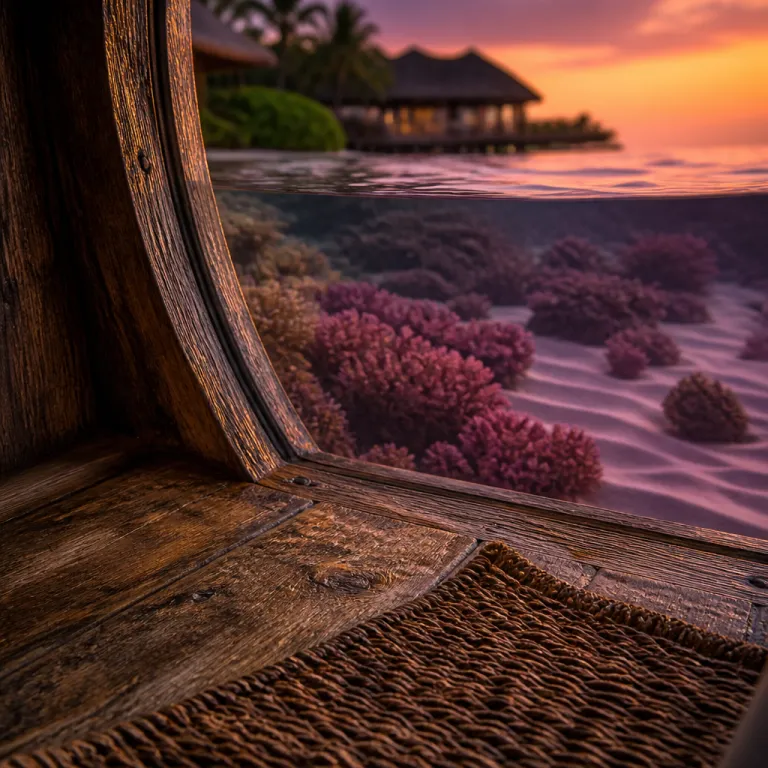
The reality of sleeping in Pemba Island’s underwater room
The Pemba Island underwater hotel experience is not a marketing metaphor but a single, freestanding suite anchored in the Indian Ocean off the northwestern tip of Pemba. The Manta Resort operates this underwater room as a private three level hideaway, with a floating deck on top, a sea level lounge and a submerged bedroom four metres below the surface where glass walls frame a living reef in the Pemba Channel. A small boat transfers you from the main resort on Pemba Island to this floating structure, and from the moment the engine cuts you feel the ocean, the water and the silence take over.
At sea level, the room feels like a pared back island cabin, with simple seating, a freshwater shower and steps leading to the roof deck where many couples choose to sleep under the stars for at least one night of their stay. Down a short ladder, the underwater room reveals its drama; a double bed sits in the centre, surrounded on all sides by the marine world, with reef fish, squid and sometimes octopus drifting past the windows. During the day, sunlight filters through the water and lights up the coral heads, while at night subtle underwater lighting draws in plankton and creates a slow motion ballet of fish and other marine life.
The Manta Resort confirms that there is only one underwater room, and that exclusivity is part of the price tag, which currently sits around 1 500 USD per night for a couple with an included stay package covering meals and boat transfers. Official information from the operator states very clearly: "What is the Underwater Room? A floating suite with a submerged bedroom offering 360-degree marine views." Safety is engineered into every element of the structure, and the resort is equally explicit on this point: "Is it safe to stay underwater? Yes, designed with safety and comfort in mind." For the most up to date inclusions, seasonal supplements, cancellation terms and any conservation levies, the resort advises checking its current rate sheet or contacting the reservations team directly via its booking channels.
Design, art and marine conservation behind the Manta Resort concept
Behind the headline of the Pemba Island underwater hotel lies a serious piece of design and engineering that has reshaped expectations for resort underwater experiences in East Africa. The structure was conceived by Genberg Underwater Hotels, a specialist studio sometimes referred to locally as Genberg Art because of its sculptural approach to floating architecture, and then realised in partnership with marine engineers and local boat builders on island Tanzania. The result is a compact, eco friendly suite that sits lightly in the Pemba Channel while still delivering the comfort level luxury travellers expect from a high end resort in the Zanzibar Archipelago.
The floating platform uses carefully balanced buoyancy and anchoring systems so that the underwater room remains stable even when the ocean surface is choppy, and the glass panels are engineered to withstand pressure at four metres of depth. Underwater lighting is calibrated to attract reef fish without disorienting them, and the resort works closely with regional marine conservation partners to monitor coral growth on the supporting structures. Internal monitoring reports shared by The Manta Resort note that the immediate coral reef around the underwater room structure now functions as a micro sanctuary, where reef fish populations appear denser and delicate coral species are slowly reclaiming previously damaged patches of seabed, although full peer reviewed scientific surveys are still ongoing and sighting data remains indicative rather than definitive.
From a booking perspective, The Manta Resort is transparent about the cost per night and the limited availability, and it is wise to secure dates many months in advance if your itinerary through Zanzibar and Pemba includes this specific room. The property sits outside the global chains but has the service culture and attention to detail you would expect from the best curated hotel collections, similar in spirit to the Tanzanian properties highlighted in this overview of preferred hotels in Africa. For couples, the key question is not whether the underwater room is impressive, but whether you are comfortable with the intimacy of a small, enclosed space surrounded entirely by water for at least one night of your stay.
What a night underwater on Pemba actually feels like
Arriving at the Pemba Island underwater hotel is a sensory shift; the main resort on Pemba Island feels grounded, with garden rooms set among trees and a broad beach facing the Indian Ocean, while the boat ride out to the floating suite feels like a gentle untethering. Once the staff have shown you the systems and retreated to shore, the silence is broken only by the slap of water against the hull and the occasional call of seabirds circling above the reef. Many couples spend their first hours on the roof deck, watching the sun slide into the Pemba Channel and feeling the structure pivot almost imperceptibly with the ocean swell.
As night falls, the underwater lights flick on and the bedroom becomes a private observatory for marine life, with schools of tiny fish swirling in the beams and larger reef fish cruising in from the darker edges of the coral reef. The experience is less like an aquarium and more like a slow, meditative theatre, where you lie on the bed and let the movement of the water and the life outside dictate the rhythm of the evening. Some guests report waking in the small hours to find a curious octopus pressed against the glass, or a manta like silhouette gliding past in the moonlit water, although sightings of actual manta rays here are occasional rather than guaranteed and should be treated as a bonus rather than an expectation.
By morning, the underwater room feels transformed again as shafts of sunlight cut through the water and illuminate the coral heads, and you can climb straight from the sea level deck into the ocean for a swim before breakfast. For travellers weighing up whether to focus their beach time on Zanzibar or Pemba, this detailed guide to choosing between Zanzibar and Pemba is a useful starting point. In practice, the underwater stay works best as a one or two night highlight within a longer itinerary that might also include classic garden rooms at the main resort on Pemba, a few days on another island in the Zanzibar Archipelago and time on the mainland for safari.
Treehouses, crater floors and floating camps across Tanzania
The Pemba Island underwater hotel is the most photographed of Tanzania’s outlier stays, yet it sits within a broader movement of properties that treat the room as an experience rather than a simple place to sleep. In the Serengeti and Tarangire, a handful of lodges now offer elevated treehouse style platforms where you can spend the night above the bush, listening to elephants move through the grass below while the Milky Way arches overhead. These tree level rooms are not about ocean views or reef fish, but they share with the underwater room a sense of immersion in the surrounding ecosystem that many couples now actively seek.
On the rim of Ngorongoro, a small number of operators hold coveted permits to camp on the crater floor itself, creating temporary camps that sit among the wildlife rather than above it, with strict rules to ensure a light footprint and full removal after each season. These crater floor stays are the highland counterpart to the resort underwater concept on Pemba, trading marine life and coral for lions, hyenas and the soft grunt of hippos at night. Mobile camps in the Serengeti follow the same philosophy, shifting position with the migration and leaving almost no trace once the canvas is packed away, which appeals to travellers who value both comfort and a strong conservation ethic.
For those planning a wider circuit through East Africa, it can be useful to compare these Tanzanian innovations with elevated riverfront camps in Kenya, such as those profiled in this review of refined safari luxury in Samburu. The common thread is a willingness to rethink what a room can be, whether that means a platform in an acacia tree, a tent on the crater floor or a floating suite anchored above a coral reef in the Pemba Channel. When you start to view your stay as part of the landscape rather than separate from it, the line between accommodation and experience begins to blur in the most rewarding way.
How to book, what it costs and who it really suits
Securing the Pemba Island underwater hotel requires more planning than a standard beach resort, because The Manta Resort operates only one underwater room and demand from couples is consistently high. The property recommends booking many months ahead, especially if you are tying the stay to fixed safari dates or international flights into Zanzibar or Dar es Salaam, and being flexible by a night or two can make the difference between success and disappointment. Expect the cost per night for the underwater suite to sit around 1 500 USD for two people, with an included stay package that covers meals, drinks and the short boat transfers between the main resort and the floating structure, plus any seasonal supplements listed on the current rate sheet.
Most travellers split their time between the underwater room and the land based rooms at the main resort on Pemba, which range from simple garden rooms set back from the beach to more spacious seafront options overlooking the Indian Ocean. This combination allows you to enjoy the reef and marine conservation activities during the day, including guided snorkelling on the nearby coral reef and dives on the outer wall of the Pemba Channel, while still having access to a larger pool, spa and social spaces on shore. The underwater night or nights then become the crescendo of the stay, a concentrated dose of ocean immersion that feels all the more special because it is finite.
This kind of resort underwater experience suits couples who are comfortable on the water, who enjoy the idea of isolation and who see accommodation as a central part of the trip narrative rather than a backdrop. If you are prone to claustrophobia, uneasy at sea or simply prefer the buzz of larger Zanzibar beach resorts, you may be happier with a more conventional island Tanzania stay that still offers strong marine life and coral reef access. For those who do lean into the concept, the combination of Pemba Island’s quiet beaches, the floating architecture of the underwater room and the wider conservation story around the reef creates a stay that feels genuinely singular within the Zanzibar Archipelago and, arguably, within East Africa as a whole.
Why these outlier stays matter for Tanzania’s hotel future
The Pemba Island underwater hotel is more than a photogenic one off; it signals how Tanzanian hospitality is evolving as new rooms come online across the country. With thousands of additional keys planned in the national hotel pipeline over the next few years, the challenge is not simply to build more capacity but to create stays that feel rooted in place, whether that means a floating suite above a coral reef, a tree level platform in the Serengeti or a crater floor camp in Ngorongoro. Properties like The Manta Resort show that it is possible to combine high touch service, serious marine conservation partnerships and an eco friendly design ethos without sacrificing comfort.
From a traveller’s perspective, these outlier properties raise expectations for what a resort in Zanzibar, Pemba or mainland Tanzania should offer, shifting the focus from generic luxury to specific, location driven experiences. When you have slept in a room manta style suite surrounded by water and reef fish, or watched the sunrise over the Pemba Channel from a private deck, it becomes harder to accept a standard room that could be anywhere in the world. This pressure can be healthy for the market, encouraging both new builds and established resorts to think more creatively about how their rooms, beaches and surrounding landscapes interact.
For couples planning a romantic circuit through island Pemba, the wider Zanzibar Archipelago and the northern safari parks, the smartest itineraries now weave together different forms of immersion; a night underwater, a few nights in a tree level camp, time on a quiet beach and perhaps a mobile camp that follows the wildlife. Each stay adds a different layer of narrative, and together they turn a Tanzanian holiday into a sequence of distinct chapters rather than a single, blended experience. In that sense, the underwater room off Pemba Island is not just a headline act but a catalyst, pushing the entire island Tanzania hospitality scene to rewrite its own playbook around water, wildlife, coral and the fragile life systems that make these journeys possible.
FAQ
How much does a night in the Pemba Island underwater room cost ?
The Manta Resort currently prices the underwater room at around 1 500 USD per night for two people, with an included stay package that typically covers meals, drinks and transfers between the main resort and the floating suite. Rates can vary slightly with season and demand, and may be subject to conservation levies or supplements, so it is wise to confirm current pricing directly with the property before locking in flights. Remember that there is only one such room, so availability often drives booking decisions more than marginal price differences.
What exactly is the underwater room at The Manta Resort ?
The underwater room is a three level, floating structure anchored off the coast of Pemba Island, with a roof deck, a sea level lounge and a submerged bedroom four metres below the surface. Large glass panels on all sides of the bedroom provide 360 degree views of the surrounding coral reef, reef fish and other marine life in the Indian Ocean. It functions as a fully private suite, with guests transferred by boat from the main resort on Pemba, and images of the structure usually include alt text such as "Pemba Island underwater room in the Pemba Channel" or "floating suite at The Manta Resort" to reflect its exact location.
Is it safe to sleep underwater in this kind of room ?
The structure was designed by Genberg Underwater Hotels in collaboration with marine engineers, using robust materials and safety systems tested for long term use in the Pemba Channel. The bedroom sits at a shallow depth, and the resort maintains regular inspections of the hull, anchoring and life support systems, including ventilation and communications, in line with its published safety information. Guests receive a full briefing before their stay, and a shore based team monitors conditions throughout the night, with clear protocols for weather, access and emergency response.
How far in advance should I book the Pemba underwater stay ?
Because there is only one underwater room and global demand is high, it is sensible to plan at least several months ahead, especially if you are travelling in peak dry season or tying the stay to fixed safari dates. Flexible travellers sometimes find last minute gaps, but couples with limited time in Tanzania should not rely on this. Align your flights into Zanzibar or Dar es Salaam only after you have secured written confirmation of your underwater dates and checked the resort’s cancellation policy, minimum stay rules and transfer timing from Pemba Island airport.
Is Pemba Island better than Zanzibar for a romantic beach holiday ?
Pemba Island offers a quieter, more rural atmosphere than the main island of Zanzibar, with fewer large resorts, excellent diving and a stronger sense of being off the usual circuit. Zanzibar, by contrast, has more varied dining, nightlife and cultural experiences, especially around Stone Town and the busier beach zones. Many couples choose to combine both, using Pemba for the underwater room and reef focused days, and Zanzibar for restaurants, history and a livelier coastal scene, creating a balanced island Tanzania itinerary that makes the most of each destination.