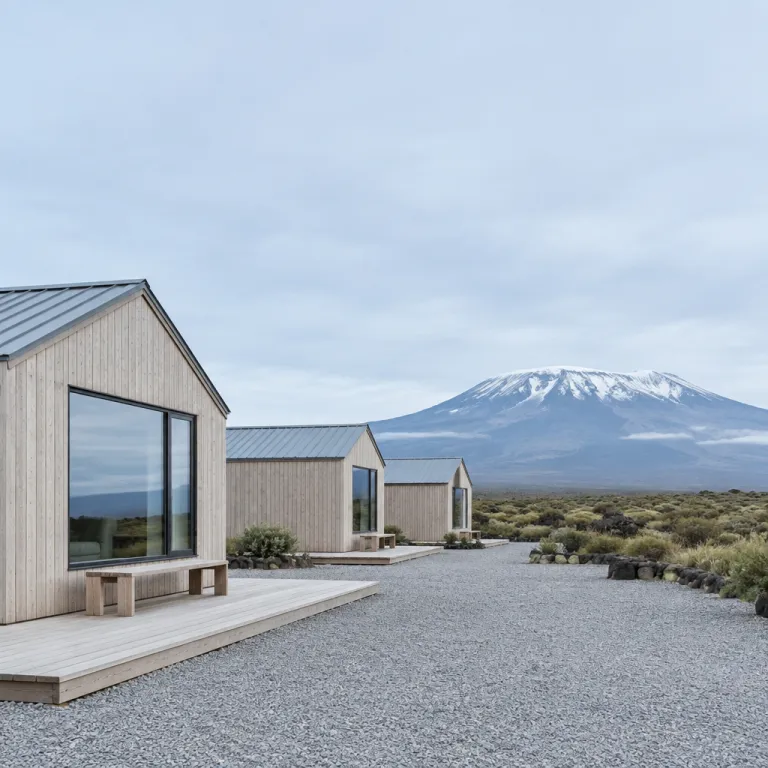
Choosing your Kilimanjaro base camp lodge in Moshi and Arusha
The phrase Kilimanjaro base camp lodge usually refers to the hotel or guesthouse you choose in Moshi or Arusha before you step through any park gate. Think of this pre-climb base as your first acclimatization camp, a quiet place where your pulse slows before the mountain demands long hours of effort. For a solo explorer, the right lodge feels like a private briefing room, not just another anonymous night in transit.
Moshi sits closer to Mount Kilimanjaro and suits climbers starting from Marangu Gate, Machame Gate or the Mweka Gate descent corridor. Properties such as Kilimanjaro Wonders Hotel and Parkview Inn pair elevated positions with gardens that mimic the calm of a low-altitude camp, giving your body time to adjust while you watch the mountain clear at daybreak. Arusha, by contrast, works beautifully for those taking the Lemosho or Shira approaches from Londorossi Gate, where a slightly higher town elevation and leafy suburbs create a softer landing after long miles of travel.
Climbers often ask, “What are the best lodges in Moshi?” and the verified answer is simple: popular options include Kilimanjaro Wonders Hotel and Parkview Inn, along with a range of mid-range guesthouses and boutique stays. That same pattern of questions includes “Is it necessary to stay in Moshi before the climb?” with a clear response: yes, at least one night in Moshi or Arusha is strongly recommended for acclimatization and preparation. When you book, follow expert guidance to reserve accommodations in advance, choose lodges with consistently good reviews, and consider proximity to your starting point, because the time you save on transfers becomes extra rest before your first day on the trail.
For quick comparison, Moshi generally offers shorter transfers to Marangu, Machame and Mweka Gates (about 45 to 90 minutes by road) and a more compact town center, while Arusha provides easier access to Londorossi and other western trailheads (roughly 2.5 to 3 hours by vehicle) plus a wider spread of safari lodges. Typical pre-climb room rates range from budget guesthouses at around US$30–60 per night to comfortable mid-range hotels at roughly US$80–150, with high-end lodges starting from about US$200 depending on season and availability.
How pre climb lodges shape your route from Shira Camp to Barafu Camp
Every Kilimanjaro base camp lodge decision subtly shapes the rhythm of your route, especially on the Lemosho and Shira lines that arc across the western flanks. Stay in Arusha and you shorten the transfer to Londorossi Gate, typically to around 2.5 to 3 hours by road, reaching the trailhead earlier in the day and walking the first miles to Mti Mkubwa Camp in gentler light. Base yourself in Moshi instead and you trade a longer drive of roughly 3.5 hours for more urban cafés, supermarkets and gear shops, which some solo climbers value before they climb Mount Kilimanjaro.
On the mountain itself, the language of comfort changes from thread count to tent pitch, yet the logic of pacing remains the same. A well-rested body at the trailhead usually copes better with the shift from forest to alpine desert between Shira Camp, Lava Tower and Barranco Camp, where the air thins and the Barranco Wall looms above the valley. By the time you reach Karanga Camp (often called Camp Karanga) and then Barafu Camp, the final base camp for summit day, you will feel the benefit of that first quiet night in town.
Think of your hotel as the unofficial first camp on the way to Uhuru Peak, even though the official high camps are Barafu Camp, Kibo Hut on the Marangu Route and, on some itineraries, the Crater Camp in the volcanic crater. The elevation of Barafu Camp at about 4,640 meters and Kibo Hut at roughly 4,700 meters means your body must already be comfortable with long hours on the trail before you arrive. Choosing a lodge with gardens, shaded terraces and a calm atmosphere lets you simulate the slower pace of a national park camp, so your transition from city to mountain feels beautifully gradual.
For travelers pairing their climb with wildlife, it is worth looking at luxury lodges near Kilimanjaro for premium safari experiences and views. These properties bridge the gap between a Kilimanjaro base camp lodge and a safari retreat, especially if you plan to continue toward Tarangire National Park landscapes or the Ngorongoro Crater after your summit. In that case, your pre-climb and post-climb nights become the elegant bookends of a wider northern circuit journey, often coordinated through your guiding company or a specialist travel planner.
Post summit sanctuaries: where to sleep after Mweka Gate
The descent from Uhuru Peak back to Mweka Camp or Barafu Camp and then down to Mweka Gate compresses huge altitude loss into a single long day. Your legs will have counted the miles from the crater rim through the alpine desert and into the forest, and by the time you sign out at the Kilimanjaro National Park office you will be thinking only of a hot shower. This is where the choice of your post-summit Kilimanjaro base camp lodge matters more than any gear list.
Many climbers return to the same Moshi or Arusha hotel they used before the climb, turning a familiar room into a personal recovery camp for that first night back. Others deliberately upgrade for the final stay, booking a property with a pool, spa and slow service at dinner so that summit day ends with a ritual rather than a collapse. Either way, ask for late check-out hours if possible, because your body clock after a night ascent rarely aligns with standard hotel time, and confirm airport transfer options in advance so you are not negotiating taxis when exhausted.
Solo travelers who want to stretch the journey often schedule a soft landing between the mountain and their onward flight. One smart tactic is to use a city hotel on the Dar es Salaam to Arusha route as a decompression stop, and guides on platforms such as mytanzaniastay.com have already mapped stopover stays that turn travel days into part of the trip. From there, you can connect to coastal or island retreats, or loop back toward Tarangire conservation areas and the Ngorongoro Crater for a different kind of camp entirely.
When you compare options, look beyond the obvious promise of a comfortable bed and a beautiful view. Ask whether the property can arrange laundry within a day, whether the kitchen can handle the hearty lunch and early dinner appetites that follow a climb, and whether massage or physiotherapy is available on site or nearby. A good post-summit lodge understands that your priorities are warmth, quiet and uncomplicated service, not late-night entertainment, and will confirm these details clearly at the time of booking.
Acclimatization stays and coffee farm lodges around Mount Kilimanjaro
Spending an extra day or two at altitude before you climb Kilimanjaro is no longer a niche strategy, it is standard practice among well-briefed travelers. The rise in pre-climb acclimatization packages around Moshi and Arusha reflects a simple truth: a rested body handles the shift from forest to alpine desert more gracefully. For solo explorers, those extra nights can be the most beautiful part of the journey, especially when spent on a working coffee farm.
Several estates on the lower slopes of Mount Kilimanjaro operate as discreet lodges, offering walking trails that mimic a gentle day climb without the pressure of a summit schedule. You might spend one day wandering between coffee trees and waterfalls, covering a few miles at a relaxed pace, then return for a long lunch on the veranda and a slow dinner under clear skies. That rhythm of movement and rest prepares you for the alternating effort between Shira Camp, Lava Tower, Barranco Camp and Karanga Camp, where the real altitude work begins.
Acclimatization is not only about elevation, it is also about mental pacing and sleep. A quiet Kilimanjaro base camp lodge on a farm lets you adjust your night routine, testing how your body responds when you go to bed early in preparation for summit day. By the time you reach Camp Karanga or Barafu Camp, your internal clock will already be tuned to those odd hours, making the final push to Uhuru Peak feel demanding but not chaotic.
These coffee farm lodges also appeal to travelers who never intend to set foot on Barranco Wall or Mweka Camp, but still want to feel the mountain’s presence. They offer guided walks that echo sections of the Lemosho and Shira routes, without entering the national park itself, and day trips to Tarangire National Park or the Ngorongoro Crater for wildlife. For many, this blend of soft adventure and agritourism delivers the essence of Kilimanjaro without the full climb, and can be booked either directly with the lodge or through a local tour operator.
From glacier recovery to Zanzibar spas: extending your Kilimanjaro journey
One of the quiet revolutions on Mount Kilimanjaro has been the measured retreat of its glaciers, with total ice cover shrinking from roughly 11.4 square kilometers in 1912 to well under 2 square kilometers in recent satellite analyses (for example, studies by Cullen, Mölg and colleagues on Kilimanjaro ice fields published in journals such as Proceedings of the National Academy of Sciences). For climbers, that means summit day from Barafu Camp or Kibo Hut to Uhuru Peak now passes smaller, fragmented ice fields, changing both the light and the temperature in those final hours. A good Kilimanjaro base camp lodge or guiding company will brief you clearly on these conditions, so you pack layers that match reality rather than outdated images.
Conservation efforts by the Kilimanjaro National Park Authority (KINAPA), including large-scale tree planting and community forestry projects, have also helped stabilize some local weather patterns according to KINAPA and Tanzanian government reports. That has subtle effects on the feel of the climb between Shira Camp, Lava Tower, Barranco Camp and Karanga Camp, where cloud build-up and wind used to be more erratic. When you sit at dinner in Moshi or Arusha the night before your climb, ask your guide how these changes might influence your chosen route and the time you spend in each camp.
Many travelers now frame their climb between two very different kinds of recovery. Before the ascent, they use a quiet lodge near the mountain as a mental and physical base, then after Mweka Gate they head straight for coastal or island wellness retreats. If you are tempted by that idea, explore a curated guide to wellness stays in Zanzibar with serious spas, which pairs beautifully with a week of dust, alpine desert and summit effort.
Whether you end your journey in a Moshi garden, a safari lodge near Tarangire National Park landscapes, a camp on the rim of the Ngorongoro Crater or a Zanzibar spa, the principle remains the same. The lodges you choose before and after you climb Kilimanjaro are not footnotes, they are structural pillars in the story of your trip. Treat each Kilimanjaro base camp lodge as deliberately as you treat your choice of route, and the mountain will feel less like an ordeal and more like a beautifully paced expedition.
FAQ
Is it necessary to stay in Moshi before climbing Kilimanjaro ?
Yes, staying at least one night in Moshi or Arusha before you climb is strongly recommended for acclimatization and logistics. The common guidance echoes the question “Is it necessary to stay in Moshi before the climb?” and answers clearly, “Yes, for acclimatization and preparation.” A pre-climb night also allows time for gear checks, briefings and any last-minute adjustments with your guiding équipe, and most operators will help you coordinate hotel reservations as part of the package.
How many nights should I book at a Kilimanjaro base camp lodge ?
Most climbers book one night before the climb and one night after, but two nights before can significantly improve acclimatization. If you plan a longer route via Shira Camp, Barranco Camp and Karanga Camp, consider an extra pre-climb night to arrive fully rested. Post-summit, at least one recovery night near Mweka Gate or in Moshi makes the transition back to normal life far more comfortable, and many travelers add a further night in Arusha or by the coast before flying home.
What should I look for in a luxury lodge before my climb ?
Prioritize quiet rooms, good bedding, reliable hot water and flexible meal times for early breakfast and early dinner. Gardens or open grounds help your body adjust gently, echoing the calm of a national park camp before you reach Barafu Camp or Kibo Hut. Strong reviews, proximity to your chosen gate, responsive staff and clear communication about airport transfers are better indicators of a successful pre-climb stay than flashy décor alone.
Are there good options for non climbers near Mount Kilimanjaro ?
Yes, several coffee farm lodges and countryside retreats around Moshi and Arusha cater to travelers who want mountain views without a full climb. These properties offer guided walks that feel like a soft day climb, cultural visits and day trips toward Tarangire National Park reserves or the Ngorongoro Crater. They work beautifully as bases for friends or partners who prefer comfort while others tackle the mountain, and can be combined with short safaris or cultural tours.
How far in advance should I book my Kilimanjaro lodges ?
For peak dry seasons, aim to secure your Kilimanjaro base camp lodge several months ahead, especially for smaller high-end properties. The usual advice is to book accommodations in advance and choose lodges with good reviews, which becomes critical when 60,000 to 70,000 climbers are moving through the region each season. Early booking also gives you better room choices, more stable prices and more time to coordinate transfers with your tour company or travel agency.