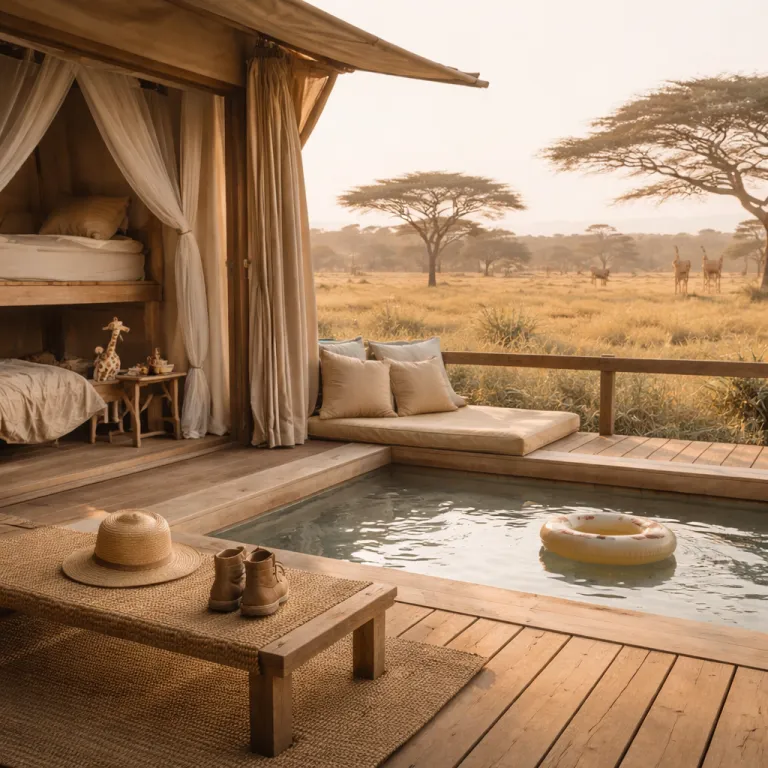
Accommodation in Tanzania for families who want real comfort and calm
Parents planning accommodation in Tanzania quickly realise that not every lodge or camp genuinely works for children. The best accommodation options balance luxury, safety and flexibility, so your family can enjoy a Tanzania safari without feeling that the kids are an afterthought. When you choose carefully, your stay in Tanzania becomes a relaxed, great experience rather than a logistical puzzle.
Across Tanzania, accommodation ranges from high-rise city hotels to tented camps in the heart of a national park. Lodges and safari lodges inside the Serengeti National Park ecosystem or near Ngorongoro offer unforgettable proximity to wildlife, while coastal resorts in Zanzibar and on Zanzibar’s east beaches bring a softer, sand-between-the-toes rhythm. Prices for a night typically run from about 50 to 500 US dollars, depending on the room category, location and level of luxury, according to broad ranges published by the Tanzania Tourist Board in 2023.
For families, the first filter is safety and layout rather than the most dramatic wildlife view. Ask whether the lodge has interconnecting suites or a family villa, and whether children can spend the night in the same tented unit as parents or must be in a separate room. In remote camps and tented camps, clarify how staff escort children after dark, how open-air walkways are secured and whether the camp perimeter is patrolled throughout the night.
Four essential questions every parent must ask before booking a safari stay
Before you confirm any accommodation in Tanzania, have a direct conversation with the property or your tour operator. The first question is minimum age on game drives, because policies vary sharply between each safari lodge and even between different camps within the same brand. Some safari lodges allow children from six years on shared vehicles, while others insist on a private vehicle until twelve or even sixteen; always verify the current policy on the lodge’s own website, as these rules are updated regularly.
The second question concerns in-camp activities when parents head out on a longer Tanzania safari drive. Ask what structured options exist beyond colouring books, and whether guides lead nature walks around camp, simple tracking lessons or stargazing sessions at night. Asilia Africa and &Beyond both run named children's programmes, Wildchild and WILDchild, which turn the safari experience into gentle learning rather than passive waiting in the room; check the latest programme details on each operator’s family-safari page for 2024–2025.
Third, interrogate the physical configuration of the accommodation and suites. You want to know whether there are true interconnecting rooms, two-bedroom suites or stand-alone family tents with separate sleeping areas under one roof. For city breaks in Dar es Salaam, this is where a property with well-planned premium suites can transform a quick overnight into a calm reset, and you will find detailed analysis in our guide to premium accommodation in Dar es Salaam.
The final question is about food and dietary handling, which matters as much in a remote Serengeti camp as in a Zanzibar resort. Clarify how the kitchen handles allergies, whether early dinners can be served for younger children and if packed breakfasts are possible when you leave before dawn. When a lodge answers these four points clearly and confidently, it usually signals a well-run operation where your family will feel looked after from the first night.
Dar es Salaam highlights for premium families between bush and beach
Dar es Salaam is more than a transit stop between the Serengeti plains and Zanzibar east beaches. For families, the city offers a soft landing into accommodation in Tanzania, with air-conditioned suites, reliable Wi-Fi and swimming pools that reset body clocks after long flights. Choosing the right location in the city also cuts transfer times to the airport and ferry, which matters when you travel with younger children.
Premium hotels along the Msasani Peninsula and central business district now compete seriously with safari lodges for service standards. Many offer family rooms or multi-room suites, with separate living areas where parents can unwind while children sleep in a connected room. Our review of premium suites in Dar es Salaam highlights properties that combine thoughtful design, quiet corridors at night and staff who understand jet-lagged families.
When you stay in Tanzania's largest city, you trade wildlife views Serengeti style for Indian Ocean horizons and urban energy. Look for open-air terraces where you can eat early dinners, and pools with shallow sections suitable for children rather than only deep lap lanes. A well-chosen Dar es Salaam hotel becomes the hinge between your Tanzania safari and your time in Zanzibar, giving everyone a night of deep sleep before the next leg of the journey.
Northern circuit: family friendly safari lodges and tented camps that genuinely work
The northern safari circuit remains the backbone of accommodation in Tanzania for first-time visitors. Here, Serengeti safari camps, Ngorongoro Crater lodges and Tarangire riverfront properties line up in dense choice, but only a subset truly suits families. Your task is to match age tiers with the right style of camp, so that each child has a safari experience that feels exciting rather than overwhelming.
In the Serengeti National Park ecosystem, tented camps with solid flooring, proper doors and generous verandas often work better for families than ultra-minimal mobile camping. Look for tented camps that offer two-bedroom family tents or linked tents under one extended roof, giving parents and children separate sleeping spaces while remaining in a single unit. Properties such as &Beyond Serengeti Under Canvas or Asilia Africa's Sayari Camp pair luxury safari comforts with serious guiding, and they often arrange child-focused activities between drives; both brands publish current family guidelines and minimum ages on their official camp pages.
Further east, Ngorongoro Crater Lodge and Singita Sasakwa in the private Grumeti Reserve both offer family villa-style accommodation. These suites often include private plunge pools, multiple bedrooms and a dedicated lounge, which transforms a simple stay in Tanzania into a Tanzania spectacular event for children. When you can spend the night in a villa where giraffes graze below your terrace and staff quietly reset the room while you eat breakfast, the whole family feels the magic of wildlife without sacrificing rest.
Age tiers on safari: how policies shift at six, twelve and sixteen
Age matters on safari, not only for safety but for how guides structure each day. At around six years, many safari lodges begin allowing children on shorter game drives, often close to camp and at slower speeds with more frequent stops. This is also the age when children's programmes like Wildchild and WILDchild become meaningful, because kids can follow tracks, learn bird calls and engage with the bush as a living classroom.
The twelve-year threshold usually changes access to longer drives and walking activities in a national park. Some camps will allow twelve-year-olds on longer Serengeti safari excursions, while keeping walking safaris restricted to sixteen and above for safety reasons. Parents should ask specifically how guides handle mixed age groups on vehicles, so that one restless teenager does not dictate the rhythm for an entire vehicle of adults who came for a focused Tanzania safari experience.
By sixteen, most properties treat teenagers as adults for activity planning, though not always for pricing. This is the age when longer days on the Serengeti plains, patient waits at river crossings and late-night spotlight drives become realistic. When you align your accommodation options with these age tiers, you avoid frustration and ensure that each child has a great experience without the rest of the camp feeling compromised.
From Serengeti plains to Zanzibar east: stitching bush and beach for families
The classic arc of accommodation in Tanzania runs from the Serengeti plains to the Swahili coast, and families are uniquely well placed to enjoy both. After several intense days in a safari lodge, with early wake-ups and long drives, shifting to Zanzibar or Zanzibar east beaches gives children space to decompress. Here, the wildlife soundtrack gives way to waves, and the open-air rhythm of island life softens the edges of structured safari days.
On Zanzibar, look for resorts that offer family suites, shallow pools and supervised activities that go beyond screens. Properties on Zanzibar east often have wide, gently shelving beaches where children can play safely at low tide, while northern shore hotels offer calmer swimming and sunset views. For a detailed sense of how a high-end property can balance romance and family needs, our review of a serene stay on Zanzibar's northern shore shows how thoughtful design can serve both couples and multi-generational groups.
When you plan your stay in Tanzania, think of the journey as a single, continuous experience rather than separate bookings. Start with a city hotel in Dar es Salaam or Arusha, move into a mix of lodges and tented camps in at least one national park, then finish with several nights on Zanzibar. This sequence offers unforgettable contrasts and allows everyone to spend night after night in spaces that feel intentionally chosen, rather than improvised at the last minute.
Practical notes on safety, sustainability and booking for family safaris
Families often ask whether it is safe to stay in tented camps with children, especially in big game areas. The answer from seasoned operators is clear: "Is it safe to stay in tented camps? Yes, they are secure and provide necessary amenities." Well-run camps have clear after-dark escort policies, trained staff and physical barriers where needed, so that wildlife can move freely while guests remain protected; always request the latest written safety guidelines when you book.
Eco-conscious parents will find that accommodation in Tanzania increasingly leans into sustainability, from solar power to community employment. Many lodges and camps now operate with light-footprint designs, using canvas, timber and open-air structures that blend into the landscape rather than dominate it. When you choose these properties, you support local economies and help ensure that wildlife and communities both benefit from tourism revenue, in line with priorities outlined by the Tanzania National Parks Authority and the Tanzania Tourist Board in recent strategy documents.
On the booking side, demand for the best family-friendly safari lodges has risen sharply, especially between June and October. Booking six to twelve months ahead is sensible if you want specific room configurations, such as interconnecting suites or a villa with a private plunge pool. Programmes and personnel change regularly, so always confirm the current head guide and children's coordinator before you pay a deposit, and use trusted partners or established online platforms when you finalise your stay in Tanzania.
Key figures for family accommodation in Tanzania
- Tourism authorities report around 1,500,000 tourist arrivals in Tanzania in a recent year, a volume that keeps prime safari lodges and Zanzibar resorts busy during peak months; the Tanzania Tourist Board and Ministry of Natural Resources and Tourism publish updated arrival statistics annually.
- Average accommodation costs range from about 50 to 500 US dollars per night, with family suites and private villas at the upper end of this spectrum in national park locations; these broad ranges are consistent with 2022–2023 rate surveys by national tourism bodies and major tour operators.
- Peak safari season typically runs from June to October, when wildlife viewing in the Serengeti National Park ecosystem is strongest and advance booking for accommodation options becomes essential, as highlighted in current guidance from the Tanzania Tourist Board.
- Eco-friendly lodgings and community-based camps now represent a growing share of new openings, reflecting a strategic push to align tourism growth with conservation and local employment, a trend noted in recent Tanzania tourism development plans.
FAQ about luxury family accommodation in Tanzania
What is the average cost of family friendly lodging in Tanzania ?
For families, you should expect to pay from about 150 US dollars per night for simple but comfortable lodges, up to 500 US dollars or more for luxury safari camps and villas in prime wildlife areas. City hotels in Dar es Salaam and Arusha often sit in the middle of this range, especially when you book interconnecting rooms or suites. Prices vary by season, with June to October usually commanding the highest rates.
Are there eco friendly safari lodges suitable for children ?
Yes, many eco-focused lodges and tented camps in Tanzania welcome children and design activities that introduce them gently to wildlife and conservation. These properties often use solar power, minimise single-use plastics and employ staff from nearby communities. When you choose them, you support both environmental protection and local livelihoods.
Is it safe for families to stay in tented camps inside national parks ?
Well-established tented camps in national parks operate with strict safety protocols, including escorted walks after dark and clear rules about moving around camp. Tents have solid doors or zips, raised platforms and trained staff who monitor wildlife movements. Parents should still supervise children closely, but there is no need to feel exposed when you choose reputable operators.
How far in advance should I book family accommodation for a Tanzania safari ?
For peak season safaris in the Serengeti or Ngorongoro, booking six to twelve months ahead is wise, especially if you need interconnecting rooms or a family tent. Coastal stays in Zanzibar also fill early during school holidays, so align your safari and beach reservations at the same time. Shoulder seasons offer more flexibility, but the best family configurations still go first.
Can dietary requirements for children be handled in remote safari camps ?
Most quality lodges and camps in Tanzania handle common dietary needs such as vegetarian, gluten-free or nut-free meals with advance notice. Kitchens can usually prepare simpler dishes for children and serve early dinners before the main seating. Always communicate specific allergies clearly before arrival and reconfirm them with the manager when you check in.