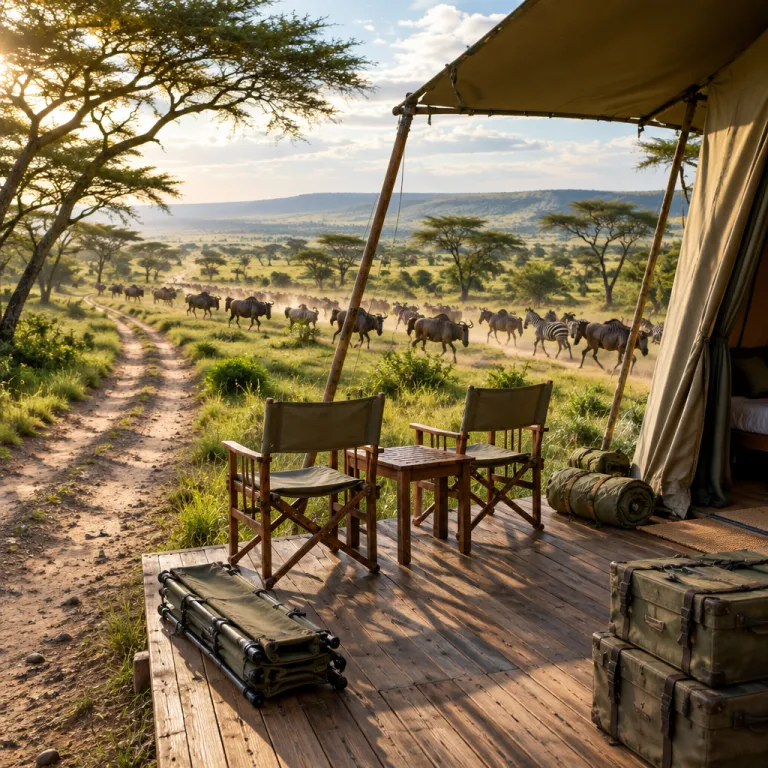
Why May is the quiet luxury moment of the Serengeti migration
For couples planning a high end safari, the much searched phrase serengeti migration may 2026 usually points straight to peak season images of chaotic river crossings. In reality, the May phase of the great migration in Tanzania is a quieter, more strategic moment, when the wildebeest herds leave the southern Serengeti and the Ndutu area and fan out across the central Serengeti plains in search of fresh grass. This is the time when luxury camps can offer lower rates, softer light, and more intimate game viewing without the traffic of the later dry season.
By May, the calving season in the southern Serengeti is over, several hundred thousand calves have already been born according to estimates from the Tanzania Wildlife Research Institute and long term monitoring projects, and the wildebeest migration is shifting north west in line with rainfall patterns documented by Serengeti National Park and the Frankfurt Zoological Society. The long rains are easing, but the landscape remains lush, so wildlife densities stay high in the Serengeti National Park core area and in the adjacent Ngorongoro Conservation Area, while temperatures are comfortable for long morning and afternoon drives. For a first time serengeti safari focused on the great migration rather than only on dramatic river crossings, this shoulder season window offers a refined balance of spectacle and serenity.
Expert operators tracking the Serengeti migration note that the herds typically start leaving the Ndutu area in April, then move through the central Serengeti and towards the western corridor by May, before reaching the Grumeti River in June as outlined by long running aerial counts and park records. This means that a migration safari in May often follows long columns of wildebeest and zebras on the move, rather than waiting at a single river bank for hours, which suits travelers who prefer varied game viewing and flexible drives. When you research the May Serengeti migration for 2026 while planning your travel, think of this period as the great migration in motion, with predators such as lions, cheetahs, and hyenas shadowing the herds across the park rather than concentrating only at the Mara River later in the season.
Central Serengeti and western corridor camps near Seronera and Grumeti: where to stay in May
For couples booking late and still hoping to align with the Serengeti in May 2026 pattern, the smartest strategy is to focus on central Serengeti and western corridor camps with reliable airstrip access. Properties in the Seronera area of Serengeti National Park, often called the central Serengeti hub, sit at a crossroads for the wildebeest migration as herds move from the southern Serengeti and Ndutu area towards the Serengeti Mara sector and eventually the Masai Mara. Here, the combination of permanent water, open plains, and rocky kopjes delivers strong wildlife viewing even if the main herds shift slightly with the rains.
High end camps positioned along this route, including those that pair well with a stay at Mwiba Lodge in the southern Serengeti for refined safari luxury, which is profiled in detail at this Mwiba Lodge southern Serengeti guide, give travelers flexibility to follow the migration day by day. In May, many couples choose intimate tented camps such as Into Wild Africa, Dunia, or Kubu Kubu, all established properties in or near the central Serengeti, where rates often sit in the region of USD 700 to 1 200 per person per night including game drives, depending on the exact camp and room category. Guides can adjust game drives towards the western corridor as the season progresses, tracking where the wildebeest and zebra herds are concentrating before they approach the Grumeti River, and this is also prime time for observing mating behavior within the great migration, as males jostle and chase across the plains while predators test the edges of the moving mass.
When comparing camps for a May migration safari, prioritize locations with easy access to both the central Serengeti and the early western corridor, rather than those fixed far north near the Mara River or the Masai Mara border. Air access is crucial because the long rains can leave some tracks heavy, so flying into Seronera, Grumeti, or nearby airstrips on scheduled light aircraft reduces transfer time and keeps you closer to the wildlife action. For couples searching for the May Serengeti migration in 2026 and weighing different areas of the park, this central position offers the best compromise between following the Serengeti migration and enjoying comfortable logistics, elegant tented suites, and unhurried sundowners overlooking the Serengeti National plains.
Planning a last minute May safari: timing, logistics, and pairing the Serengeti with the coast
Booking windows for the May Serengeti migration phase in 2026 are more forgiving than for the peak Mara River crossings, which means couples can often secure premium camps six to eight weeks out. Availability in central Serengeti and early western corridor camps tends to remain stronger because many travelers fixate on the later Masai Mara and northern Serengeti river crossings, leaving this shoulder season under appreciated. That creates an opportunity for value in Tanzania, with high calibre guides and camps offering migration safari experiences that feel exclusive without the premium of the absolute peak dry season.
From a logistics perspective, the key is to align your travel dates with the general northward movement outlined by Serengeti National Park and Frankfurt Zoological Society data, which together show the migration covering roughly 800 to 1 000 kilometres annually in search of fresh grazing. May is when the herds are typically reaching the western corridor, walking in large herds, following rain patterns, and crossing rivers, while predators such as lions, cheetahs, and hyenas adapt their hunting strategies around this movement. A simple four night outline might include two nights in the Ndutu or southern Serengeti area if conditions allow, followed by two nights in central Serengeti, with shared charter flights linking Arusha, Seronera, and the coast.
When you evaluate different Serengeti camps for a May stay, look for experienced teams who understand how the Serengeti migration interacts with specific areas such as the Serengeti Mara sector, the northern Serengeti, and the Serengeti Masai influenced regions near the Masai Mara border, even if you are not yet at the stage of dramatic river crossings. A well planned itinerary might start with a few nights in the southern Serengeti or Ndutu area if the tail end of the calving season lingers, then move to central Serengeti for flexible game viewing, using a luxury tented base such as the one profiled at this luxury tented safari camp in the Serengeti, before finishing with three or four barefoot luxury nights on Pemba Island at a serene coastal hideaway. As one expert summary from long term migration studies by the Tanzania Wildlife Research Institute and partner projects notes, the best time to see the herds in the western corridor is typically from May into June, when the movement towards the Grumeti River is in full swing and light aircraft flights between Seronera, Grumeti, and the coast keep transfers efficient.