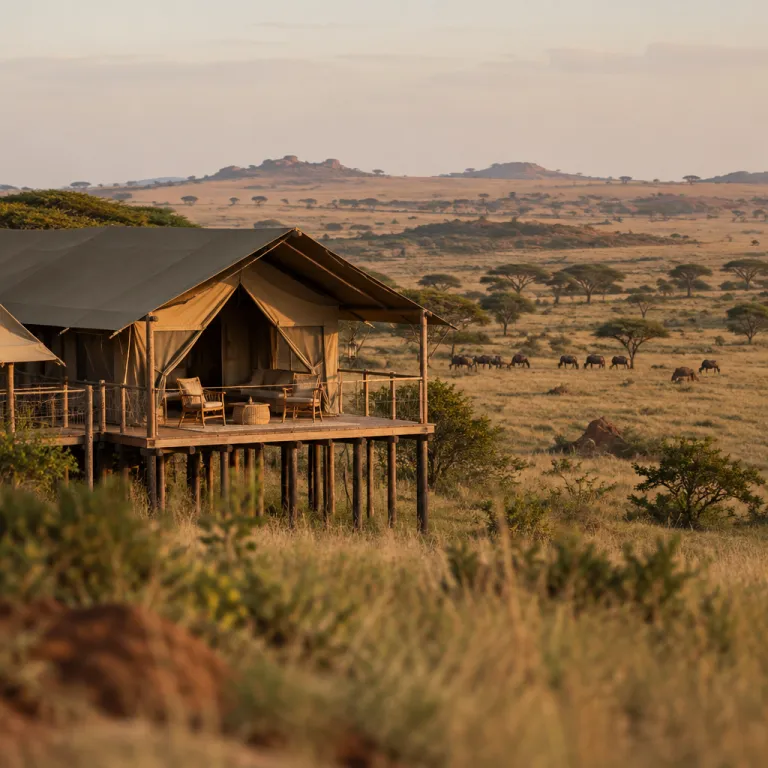
Namiri Plains as a luxury base in the eastern Serengeti
Namiri Plains sits in a remote eastern Serengeti area where big cats rule. This contemporary plains camp was created for travellers who want high comfort without losing the raw drama of a classic safari. The tented camp lies on open grassland that was once closed to visitors for cheetah conservation by the Tanzania National Parks Authority (TANAPA), which means wildlife is relaxed and game viewing feels intensely private.
The camp at Namiri is small enough for personalised service, yet large enough to offer a refined lodge atmosphere with spacious suites and polished guiding. From the main deck you look across the plains and see wildlife moving between the river lines and the open savannah, while the sounds of lions at night remind every person that this is still true wilderness. One guest described waking before dawn to the roar of a nearby pride as “the most thrilling alarm clock I have ever had”. Many visitors choose to spend several nights here, using Namiri Plains as a base to explore both the eastern Serengeti and the more central Serengeti regions on longer game drives.
Each tented camp suite at this plains camp is designed to frame the landscape, with floor to ceiling mesh panels that pull in the light and the breeze. Interiors combine canvas, stone, and pale wood, so the rooms feel airy rather than enclosed. The lodge team understands that people booking a luxury safari want clear details before they enquire, so they provide precise information on room layouts, park fees, and what is included per person night. Families with children appreciate that the camp can arrange flexible meal times and shorter game drives, while couples often prefer longer excursions into the surrounding area for more exclusive game viewing.
Choosing the right season and length of stay at Namiri Plains
Planning the best time to visit Namiri Plains starts with understanding the Serengeti seasons. During the green season the plains around the camp are lush, predators are active, and the light for photography is superb, while in the dry season wildlife concentrates around the remaining water sources and game viewing becomes very intense. Many repeat guests say that three to four nights at the lodge is the ideal duration, giving enough time for varied safari activities without feeling rushed.
In the long dry season, the eastern Serengeti area around Namiri Plains offers exceptional sightings of resident lions and cheetahs, even when the main wildebeest migration is further north. When the short rains arrive, the plains camp benefits from fresh grazing and a surge of plains game, which in turn attracts predators and creates dramatic game viewing close to the tented camp. If you are combining regions, a classic route links central Serengeti with the eastern Serengeti and then continues to Tarangire National Park, where a stay at Oliver’s Camp in Tanzania adds a contrasting river and baobab landscape.
For travellers focused on the wildebeest migration, the best time visit the northern Serengeti and the Mara River is usually later in the dry season, while Namiri Plains excels earlier when the herds often graze in the central Serengeti and eastern Serengeti. A well planned itinerary might include several nights at Namiri Plains followed by a camp near the Mara River, ensuring you experience both predator rich plains and the drama of river crossings. When you enquire with a specialist, ask them to break down costs per person night, including park fees for each national park, so you can compare seasons and regions with full financial clarity.
Game drives, walking safaris, and hot air experiences from Namiri Plains
Days at Namiri Plains revolve around unhurried game drives that start at first light. Guides know the eastern Serengeti intimately, reading tracks on the plains and along the river lines to position you for exceptional game viewing. Because the area was closed for many years, wildlife here is abundant and the number of vehicles is still relatively low, which keeps sightings calm and respectful.
Morning and afternoon game drives from the camp explore a wide area of the Serengeti National Park, often reaching into parts of the central Serengeti where large herds of wildebeest and zebra gather. When the wildebeest migration is close, you may spend hours following the herds across the plains, watching predators test the edges of the moving columns. Some guests choose to add walking safaris in designated zones, which offer a slower, more detailed look at tracks, plants, and smaller wildlife that can be missed from a vehicle.
For a different perspective, many travellers pair Namiri Plains with a dawn hot air experience over another region of the Serengeti. A carefully chosen air balloon safari lets you float above the plains at sunrise, watching game move silently below as the light changes over the national park. Major balloon operators in Tanzania typically follow strict safety standards and work closely with the Tanzania Civil Aviation Authority (TCAA), so reading a specialist guide such as choosing a camp for a hot air balloon safari before you enquire and confirm your dates helps you understand how launch sites, flight paths, and weather conditions affect the overall experience.
Family stays, children policies, and practical booking details
Namiri Plains welcomes families, but the camp has clear guidelines for children to ensure safety in this unfenced wildlife area. Younger children may need to share a tent with parents or older siblings, and walking safaris are usually restricted to teenagers and adults for security reasons. When you enquire, ask the lodge team to outline age limits for activities, as well as any minimum person night requirements for family tents.
Many parents choose Namiri Plains because the camp balances serious game viewing with flexible daily rhythms that work for children. Shorter game drives can be arranged in the cooler hours, returning to the lodge for relaxed lunches and supervised time around the pool while adults rest. Some guides are particularly skilled at engaging younger guests, turning every safari into a lesson in tracking, birdlife, and the complex behaviour of predators and plains game.
From a practical perspective, booking Namiri Plains through a specialist Tanzanian platform simplifies the process of managing park fees, internal flights, and transfers between different Serengeti areas. A reputable luxury and premium hotel booking website will provide a clear breakdown of costs per person, per person night, and per set of nights, along with a secure form where you can enter your email address and any special requests. If you are combining Namiri Plains with other tented camp options such as Little Chem Chem near Tarangire and Ngorongoro, you can use curated pages like an intimate tented lodge for Tarangire and Ngorongoro to compare styles, locations, and wildlife highlights before confirming your itinerary.
Linking Namiri Plains with the northern Serengeti and Mara River
Many travellers pair Namiri Plains with a camp in the northern Serengeti to follow the wildebeest migration. While Namiri offers superb predator action on the eastern plains, the northern Serengeti and the Mara River region deliver the spectacle of river crossings when conditions align. This combination allows you to experience both the quieter, more exclusive game viewing around Namiri and the high drama of the migration in a single safari.
When planning such a journey, consider how many nights to allocate to each lodge and area. A common pattern is three nights at Namiri Plains followed by three or four nights at a northern Serengeti camp, giving enough time to adapt to each landscape and maximise your chances of seeing key wildlife events. Internal flights link the eastern Serengeti airstrips with those near the Mara River, and your booking consultant can provide full details on schedules, baggage limits, and how park fees differ between each national park sector.
It is important to remember that the wildebeest migration is influenced by rainfall patterns, so no operator can guarantee exact timings for when herds will reach a specific river crossing. Namiri Plains remains rewarding even when the main herds are elsewhere, because resident game such as lions, cheetahs, and hyenas stay in the area year round. When you enquire, ask your consultant to explain how they track migration movements using recent field reports and long term Serengeti Migration Research Project data, and how flexible your itinerary can be if you want to adjust the balance between plains camp stays and other Serengeti lodges.
Understanding costs, park fees, and value at Namiri Plains
Luxury stays at Namiri Plains are priced per person night, with rates that usually include accommodation, meals, most drinks, and scheduled game drives. Park fees for the Serengeti National Park are charged separately and vary depending on the specific area and the season, so it is essential to read full quotations carefully. The Tanzania National Parks Authority (TANAPA) publishes official fee tables, and a transparent booking platform will itemise every cost, from conservation levies to airstrip transfers, allowing you to compare Namiri with other tented camp and lodge options across Tanzania.
When evaluating value, consider not only the nightly rate but also the quality of guiding, the exclusivity of the area, and the flexibility of activities such as walking safaris and hot air balloon flights. Namiri Plains benefits from its remote eastern Serengeti location, which reduces vehicle density and enhances the feeling of having the plains almost to yourself. For many travellers, this level of privacy and the intensity of game viewing justify a higher per person cost compared with more crowded central Serengeti properties.
To streamline your planning, prepare a concise email address list of everyone in your party and share your preferred travel dates, number of nights, and any special interests when you enquire. This allows consultants to tailor an itinerary that balances Namiri Plains with other regions such as the northern Serengeti, Tarangire, or Ngorongoro, while keeping overall logistics efficient. Once you receive a proposal, take time to read full terms, check how park fees are applied across different national park stays, and confirm that every person understands what is included before you pay the deposit.
Key figures for planning a Namiri Plains safari
- Serengeti National Park covers approximately 14 750 square kilometres, which means travel times between eastern Serengeti, central Serengeti, and northern Serengeti camps can range from one to several hours by road or 30 to 60 minutes by light aircraft (area and zoning data from the Tanzania National Parks Authority).
- The main wildebeest migration involves an estimated 1.3 to 1.5 million wildebeest, accompanied by hundreds of thousands of zebras and gazelles, creating one of the largest terrestrial wildlife movements on Earth (long term counts from the Serengeti Migration Research Project and associated ecological studies).
- Conservation and park fees in Tanzanian national parks typically represent between 20 and 30 percent of a mid to high end safari budget, so understanding these charges is crucial when comparing per person night rates across different lodges (aggregated booking data from leading Tanzanian safari operators and industry reports).
- Hot air balloon flights over the Serengeti usually last around one hour, but the full experience including transfers and breakfast often takes four to five hours, which affects how you plan game drives and other activities on that day (timings based on published schedules from major balloon companies operating in northern Tanzania and overseen by the Tanzania Civil Aviation Authority).
FAQ about staying at Namiri Plains
How many nights should I stay at Namiri Plains ?
Most travellers find that three to four nights at Namiri Plains offers the right balance between relaxed lodge time and varied game viewing. This duration allows for multiple game drives in different directions across the eastern Serengeti area, increasing your chances of seeing predators and, in some seasons, parts of the wildebeest migration. Longer stays work well for photographers or guests who prefer a slower pace with more time in camp.
Is Namiri Plains suitable for children and families ?
Namiri Plains can be suitable for families with children, but policies depend on age and the season. Younger children may face restrictions on walking safaris and certain longer game drives, while teenagers usually have access to the full range of activities. Always enquire in advance so the lodge can advise on tent configurations, safety guidelines, and any minimum age requirements.
When is the best time to visit Namiri Plains for wildlife ?
Wildlife viewing at Namiri Plains is strong throughout the year, with different seasons offering distinct experiences. The dry season concentrates animals around remaining water sources, making predators easier to find, while the green season brings dramatic skies, lush plains, and excellent photographic conditions. If you want to combine Namiri with the Mara River crossings in the northern Serengeti, a specialist can help align your dates with typical wildebeest migration patterns.
How do park fees work when staying at Namiri Plains ?
Park fees for Serengeti National Park are charged per person, per day, and are usually added to your lodge invoice or handled by your tour operator. These fees support conservation, anti poaching efforts, and park infrastructure across the Serengeti, including the eastern Serengeti area where Namiri is located. Always read full quotations to confirm whether park fees are included in the per person night rate or listed as a separate line.
Can I combine Namiri Plains with other Tanzanian parks in one trip ?
Many itineraries combine Namiri Plains with other national parks such as Tarangire, Ngorongoro, or the northern Serengeti. Light aircraft flights make it practical to move between these areas in a single journey, allowing you to experience different landscapes, wildlife concentrations, and lodge styles. A specialist booking website can coordinate flights, transfers, and park fees so that the overall route feels seamless.