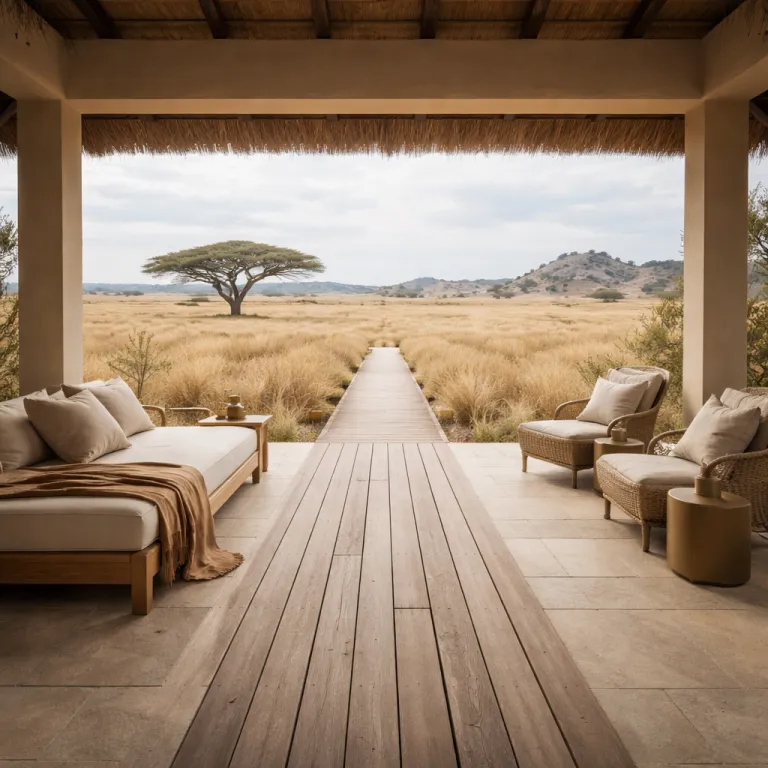
Quiet luxury in Tanzania as structural restraint, not beige minimalism
Quiet luxury in Tanzania is not a mood board of beige cushions. It is a structural decision to let wildlife, wind and light carry the narrative while the lodge architecture steps back with intent. On a serious safari in Tanzania, the real indulgence is how the camp edits out noise rather than adding more shine.
Across the Serengeti and Ngorongoro, the most interesting safari lodges are stripping away excess. They are rethinking what a luxury safari should feel like when the great migration thunders past the Mara River and every game drive already opens window after window onto drama. The best of Tanzania luxury now treats each lodge location as a listening post in the ecosystem, not a stage for chandeliers.
This matters because the language of understated luxury in Tanzania is often misused by marketing teams. Too many properties in Serengeti National Park still equate luxurious with imported marble, oversized pools and a perfumed lobby that could be in South Africa or Singapore. The newer generation of camp designers in Tanzania is instead asking how each tented structure can disappear into the national park while still delivering a deeply private experience.
Look at Kantabile Afrika in the Serengeti, which has been refining eco-luxury safari camps since it launched. Its tented camp design uses canvas, timber and low impact platforms so that every private game viewing moment feels close to the ground, not sealed behind glass. The safari experience there shows how a lodge can be luxurious yet quiet, with game drives that prioritise time with wildlife over racing between radio calls.
Nimali Africa takes a similar stance with its tented suites that connect guests directly to Tanzania’s landscapes. Here, a more discreet style of luxury means a camp that runs on thoughtful service, not theatrics, and a team that reads when you want conversation and when you want silence. Their safari Tanzania itineraries lean into slow time in camp, long views over a river or lake and carefully paced game drives that respect both guests and animals.
Laba Grumeti Art Lodge, set in a peaceful part of the Serengeti, pushes the idea further with private tented villas. Each lodge is positioned to frame the surrounding game reserve rather than itself, so the great migration or a lone giraffe becomes the artwork. This is where the quieter side of Tanzania’s luxury scene becomes tangible for couples, who can share a private experience of the Serengeti without the sense of being on display.
Behind these properties sits a broader shift in Tanzania safari culture. Demand for eco friendly, intimate safaris has risen sharply, with roughly a dozen to 20 high-end safari lodges now operating across the Serengeti region alone, according to recent summaries from the Tanzania Tourism Board and industry associations. With typical peak-season occupancy often reported in the 75 to 90 percent range and annual high end safari revenue estimated in the hundreds of millions of US dollars, the pressure is on to define luxury Tanzania in a way that supports conservation rather than eroding it.
That is why the most credible operators are investing in eco friendly construction, community engagement and low impact game drives. They understand that a national park is not a backdrop but a living system, and that every tented camp decision has consequences for wildlife and local communities. As one industry summary from the Tanzania Tourism Board puts it clearly, “In the context of Tanzanian safaris, ‘quiet luxury’ refers to exclusive, serene and eco-conscious experiences that prioritise nature and culture over display.”
Three properties that embody quiet luxury Tanzania, and one that does not
To see this restrained approach in action, start with the camps that have redesigned from the ground up. Ubuyu in Ruaha, described in recent project notes as opening with timber, thatch and clay structures powered entirely by solar, is the clearest manifesto. Here, the camp architecture is an essay in restraint, aiming to prove that a luxury safari can feel both deeply private and rigorously sustainable.
Ubuyu’s lodge location in Ruaha National Park is remote even by Tanzania safari standards. Guests will sleep in tented suites that breathe with the night air, hearing wildlife move between the river and the surrounding bush rather than an air conditioning unit. The luxury is in the silence, the quality of the mattress, the precision of the guiding and the way each game drive is tailored to the couple, not to a checklist.
Singita’s recent renovations in the Serengeti offer another benchmark for quiet, design led luxury in Tanzania. Instead of adding more polished stone, the design team leaned into natural textures, open decks and views that frame the Serengeti National Park as the main event. Game drives here feel like an extension of the lodge, with guides who know when to cut the engine and let the great migration speak for itself.
At Singita, the safari experience is calibrated to the hour, from first light over the plains to a sundowner above a winding river. Couples can expect private game drives when booked in full, but even shared vehicles are capped at around four to six guests to keep the experience intimate. This is luxury Tanzania that respects the national park as a finite resource, not an endless playground.
The Asilia portfolio updates across Tanzania show a similar philosophy. Camps in the Serengeti and near Ngorongoro Crater have been reworked with lighter footprints, more tented structures and a focus on natural ventilation rather than heavy air conditioning. For guests, that means a tented camp where canvas walls move gently in the breeze and every sound from the game reserve feels like part of the stay.
Asilia’s approach to safari lodges is to keep the hardware honest and invest in software, meaning guides, hosts and community partnerships. Game drives are unhurried, with time to sit by a river or at the edge of Lake Manyara and watch wildlife behave naturally. This is where a quieter, more regenerative form of Tanzanian luxury aligns with broader ideas of responsible travel, because the camp is designed to give more back to the ecosystem than it takes.
Contrast that with a certain high profile lodge near Ngorongoro Crater that markets itself as the epitome of quiet luxury. The rooms are vast, the baths are freestanding and the finishes would not look out of place in a city penthouse. Yet the lodge location is crowded, the drive into the national park is long and game drives often feel rushed, chasing sightings rather than crafting a coherent safari experience.
Here, the phrase quiet luxury Tanzania is used to justify beige interiors and a muted colour palette, not structural restraint. The camp footprint is heavy, the energy use is high and the connection to local communities is thin. For couples seeking a genuinely private experience of Ngorongoro Crater or the surrounding game reserve, this kind of property will feel dated very quickly.
At mytanzaniastay.com we have already stopped ranking properties by their Big Five tally, and our detailed guide on why we stopped ranking Tanzanian lodges by their Big Five tally explains how this shift changes what counts as true luxury. Quiet luxury Tanzania, in our view, is about how a lodge behaves when the spotlight is off, not how it photographs at sunset. That is the lens we use when recommending safari lodges to readers planning a once in a lifetime trip.
Where restraint ends and cost cutting begins for luxury couples
There is a hard truth that needs stating for anyone booking a Tanzania safari. Restraint can be a philosophy, but it can also be a convenient excuse for cutting corners while still charging luxury rates. Couples planning a romantic trip need to learn the difference between structural quiet luxury Tanzania and simple penny pinching.
Start with the basics that should never be compromised in any luxury safari. A camp may be tented and solar powered, but it must still offer excellent beds, safe drinking water, reliable hot showers and well maintained vehicles for game drives. When a lodge uses the language of eco luxury to justify threadbare linens or poorly maintained tracks into the national park, something is off.
Look closely at how a camp talks about its safari experience and its relationship with wildlife. Genuine quiet luxury Tanzania will emphasise guide training, low vehicle densities at sightings and respect for park rules in Serengeti National Park or Ngorongoro Crater. A property that leans heavily on spa menus while glossing over its guiding standards is signalling misplaced priorities.
Food is another clear indicator of whether restraint is thoughtful or lazy. The best safari lodges in Tanzania serve seasonal menus that reflect local produce, with simple dishes executed precisely rather than imported extravagance. When a camp blames limited choice on remoteness yet still manages a long cocktail list, you are seeing cost cutting dressed as minimalism.
Couples should also interrogate how private their private game drives or villa stays will really be. Quiet luxury Tanzania does not mean being isolated from other guests at all times, but it does mean clear communication about when you will share vehicles, guides or dining spaces. If a lodge promises a private experience yet routinely overbooks activities, the restraint narrative starts to look hollow.
Weather adds another layer to this conversation, especially for those planning a luxury Tanzania trip around specific seasons. A tented camp on the edge of a river or near Lake Manyara can feel magical in the dry months but exposed in heavy rain if design decisions were made purely on aesthetics. Our guide to planning a luxury stay around the weather in Tanzania in June unpacks how seasonality should shape both lodge choice and expectations.
Then there is the question of how camps in Tanzania compare with those in South Africa or other game reserve destinations. South African lodges often lean into more overt luxury, with solid walls, air conditioning and elaborate wine cellars, while Tanzania safari camps tend to be lighter on the land. Couples used to South Africa may initially read this as a downgrade, but in the context of quiet luxury Tanzania it is usually a deliberate, structural choice.
That said, restraint should never mean a lack of safety or professionalism. Vehicles must be properly maintained for long game drives across the Serengeti or down into Ngorongoro Crater, and radio communication with park authorities should be robust. When evaluating a camp, ask directly about their vehicle fleet, guide qualifications and emergency protocols, because these are non negotiable elements of true luxury.
Finally, pay attention to how a lodge talks about its impact on the national park and surrounding communities. Properties that invest in local employment, education and conservation projects are more likely to treat quiet luxury Tanzania as a holistic practice. Those that focus only on room features and imported amenities are often still playing by an older, more extractive rulebook.
How quiet luxury Tanzania will shape your booking decisions
For couples planning a Tanzania safari in the coming seasons, quiet luxury is no longer a niche preference. It is rapidly becoming the standard by which serious travellers judge safari lodges from the Serengeti to Ruaha and beyond. The question is not whether you want quiet luxury Tanzania, but which version of it you are willing to endorse with your booking.
Trend reports from MICE Travel Advisor, Compare Retreats and Wayfairer all point to regenerative travel and quiet luxury as the dominant frames for high end trips. In Tanzania, that translates into camps like Ubuyu, Kantabile Afrika, Nimali Africa and Laba Grumeti Art Lodge, which are building or retrofitting with eco friendly construction and deep community engagement. These are the safari lodges most likely to feel current five years from now, while some glossy properties built recently are already starting to look out of step.
When you browse a booking platform such as mytanzaniastay.com, filter your shortlist through a structural lens. Ask whether each lodge location makes sense for the kind of safari experience you want, whether that is the drama of the great migration near the Mara River, the volcanic drama of Ngorongoro Crater or the bird rich shores of Lake Manyara National Park. Then look at how each camp’s design, energy use and guiding philosophy support that setting.
Properties that will age fastest are those that invested heavily in visual minimalism without rethinking their relationship to the land. A beige heavy lodge perched on a busy rim road near Ngorongoro, with long transfers to the crater floor and rushed game drives, will feel tired as traveller expectations sharpen. By contrast, a modestly scaled tented camp with excellent guides and a strong conservation record will feel more luxurious with each passing season.
Quiet luxury Tanzania also changes how you think about value. A camp that charges a premium but includes expertly guided game drives, meaningful community visits and time to sit quietly by a river or in a private tented veranda often delivers a better overall experience than a flashier property with endless extras. Couples should weigh the full itinerary, not just the room rate, when comparing safari Tanzania options.
Booking decisions should also factor in seasonality and movement. If you want to follow the great migration across the Serengeti National Park, consider a mobile tented camp that shifts with the herds and keeps you close to the action without overbuilding in sensitive areas. For those drawn to quieter corners of Tanzania, such as Ruaha or Selous game reserve, look for camps that keep guest numbers low and game drives flexible.
Finally, remember that quiet luxury Tanzania is as much about how you travel as where you stay. Choosing fewer lodges with longer stays reduces transfers and deepens your connection to each national park or crater landscape. Opting for shared charter flights instead of multiple private hops can lower your footprint while still keeping the journey comfortable.
The most rewarding itineraries we see couples book combine a tented camp in the Serengeti with a more solid lodge near Ngorongoro Crater or Lake Manyara, balancing immersion with comfort. Across these stays, the common thread is a commitment to structural restraint, thoughtful service and a safari experience that lets wildlife, not Wi Fi speeds, set the pace. That is the version of quiet luxury Tanzania that will still feel relevant long after this year’s design trends have faded.
Key figures shaping quiet luxury Tanzania
- The Serengeti region currently hosts an estimated 12 to 20 luxury safari lodges, according to recent Tanzania Tourism Board briefings and sector overviews, which creates strong competition and pushes camps to refine their definition of quiet luxury Tanzania.
- Typical average occupancy at these luxury lodges is reported in the 75 to 90 percent range, based on Tanzania Tourism Board data summaries and operator disclosures, showing that demand for high end safari Tanzania experiences remains robust even as travellers become more selective.
- Annual revenue from luxury safaris in Tanzania is widely estimated in industry commentary at several hundred million USD, underlining how decisions about lodge design, game drives and conservation impact a major segment of the national economy.
- Industry analyses from MICE Travel Advisor, Compare Retreats and Wayfairer all highlight regenerative travel and quiet luxury as leading trends, which is accelerating investment in eco friendly tented camps and structurally restrained lodges across Tanzania’s national parks.
References
- Tanzania Tourism Board – data on luxury safari lodges, occupancy and revenue, as cited in recent tourism sector summaries and briefing notes; readers should consult the latest official reports for current figures.
- MICE Travel Advisor – trend reports on regenerative and quiet luxury travel in East Africa, including commentary on safari lodge development in Tanzania.
- Compare Retreats and Wayfairer – analyses of high end wellness and safari travel patterns, including demand for eco-conscious, low impact itineraries and structurally restrained safari camps.